
All of us have three main options to profit from AI:
1) Invest in the right AI companies.
2) Work for the right AI companies.
3) Invest in real estate that will benefit from the AI boom.
Investing in the right AI companies is easier said than done. The gorillas like Google, Tesla, Nvidia have done well. But timing is also important. For example, you could have bought Nvidia at $197 a share on Feb 25, 2026 before reporting record results, only to lose 10% one week later. While firms like Meta and Tesla lost over 60% of its value in 2022 alone.
Then there are the dominant private AI companies, which usually can only be invested in through venture capital or connections. And all of the top traditional venture capital firms are invite only, hence the novel idea of having an open ended venture fund or a closed end listed venture fund to democratize access. But most people don't read Financial Samurai or investing sites religiously to know of them.
Working for the right AI companies is extremely hard for most people. You not only have to work for the right AI company, you also have to get in. Even if you are highly talented, the competition is fierce. So this is the hardest option to profit from AI.
The final, and what I think is the easiest way to profit from AI is to buy real estate where the top AI companies are located and where the most funding is happening. If you have the money and are reasonably competent, you and your agent should be able to put together an offer on a property at a reasonable price.
The Real Estate Option Is The Picks And Shovels Strategy
If you buy real estate in an AI boomtown, then you do not really care which AI company grows the most. All you care about is that the entire industry grows and makes thousands of workers rich and liquid.
Inevitably, some of that liquidity will flow through to housing, given buying a home is usually one of the top two things every newly minted millionaire wants to buy.
We spend, on average, 18 hours a day at home, which means it is one of our most utilized assets. To be able to enjoy a nice home once you have “made it” is the American dream. Of course, you can enjoy a nice home by renting as well. But it is better to own a home where you have the potential to profit from it, too.
Couldn't Join Tech, So Invested Instead
Due to my lack of tech pedigree, it is almost impossible for me to break into the AI space. This is pretty sad since I have lived in San Francisco since 2001. Finance, no problem. But tech is out of my wheelhouse.
Hence, all I could do was invest in the main tech companies we all know today. Since I could not get a job offer at these companies, I bought their stock and made the tech employees work for me and my family.
However, as a real estate fanatic, I have consistently been buying San Francisco real estate since 2003.
In 2005, I became a landlord for the first time and started meeting many prospective tenants who worked in tech. As I got to see their finances in their applications, I realized there was a tremendous amount of money being unleashed in the Bay Area thanks to the IPOs of companies like Facebook and Google, which my firm worked on, along with several others.
If you a relatively young, under 40, I suggest you follow this plan if you want to build more wealth. Because after 40, your time shrinks and your energy fades.
San Francisco Bay Area Real Estate And AI
One of the competitive advantages of San Francisco Bay Area real estate, besides the natural beauty, year-round temperate weather, and massive wealth creation opportunities, is the lack of supply. For some reason or another, local city governments make it excruciatingly difficult to build.
I tried building an ADU in my backyard once, and I was faced with so much red tape after six months that I gave up. As a result, there is one less unit on the market today. I have also remodeled multiple properties over my 23 years. Each one was incredibly painful. As a result, I swear I will never do another gut remodel again.
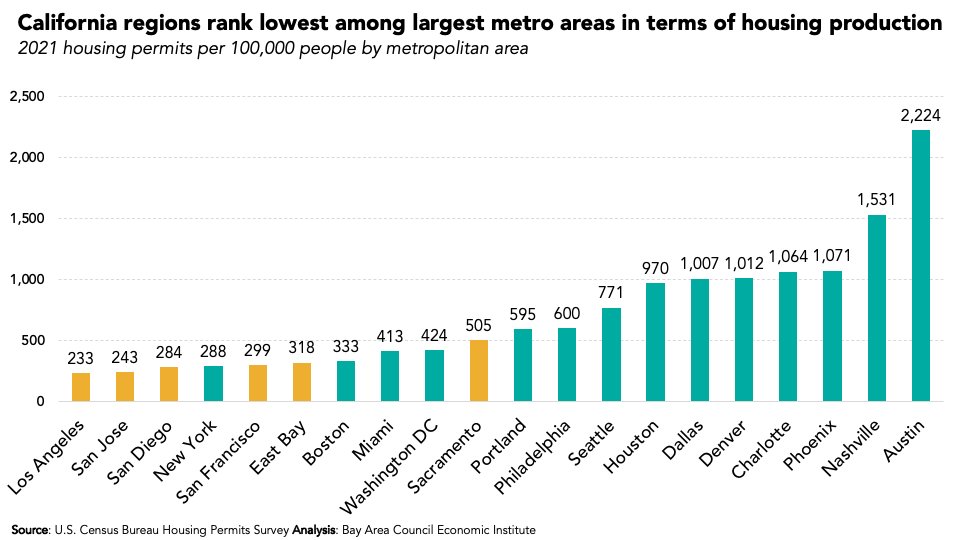
With perpetual structural undersupply, a booming technology field, and Proposition 13, which limits property tax increases, I decided San Francisco was an obvious area to invest in real estate.
Americans think San Francisco is expensive. However, San Francisco is one of the cheapest international cities in the world if you actually take a look at other areas. Please go and explore the world.
Today, with the impending IPOs of OpenAI, Anthropic, Superhuman, Harvey AI, Databricks, Together AI, and so many more, it is clear there will be a new slew of multimillionaires in the Bay Area. And with big tech companies having a great run since 2023 especially, the amount of wealth creation has been stupendous.
Not Overly Stressed Who Wins The AI Race
As a shareholder of both Anthropic and OpenAI through VCX, a listed closed-end fund on the NYSE by Fundrise and, a long-time sponsor, the whole debacle with the Department of War is fascinating.
Anthropic standing up to the government over providing it a “kill switch” for surveillance and autonomous weapons sounds like a good thing. Sam Altman, CEO of OpenAI saying he stands with Anthropic’s guardrails, and then swooping in to replace Anthropic once Anthropic got booted sounds duplicitous, yet shrewd. That’s some good Game of Thrones, Little Finger drama right there!
Lots of Anthropic employees took to X to proclaim their pride for Anthropic, while nobody did for OpenAI. Although employees at both firms want to make a lot of money, they cannot publicly celebrate money or business wins, only virtues. Anthropic was one of the first companies racing to win a $100 million Pentagon contract for voice-controlled autonomous drone swarming tech btw.
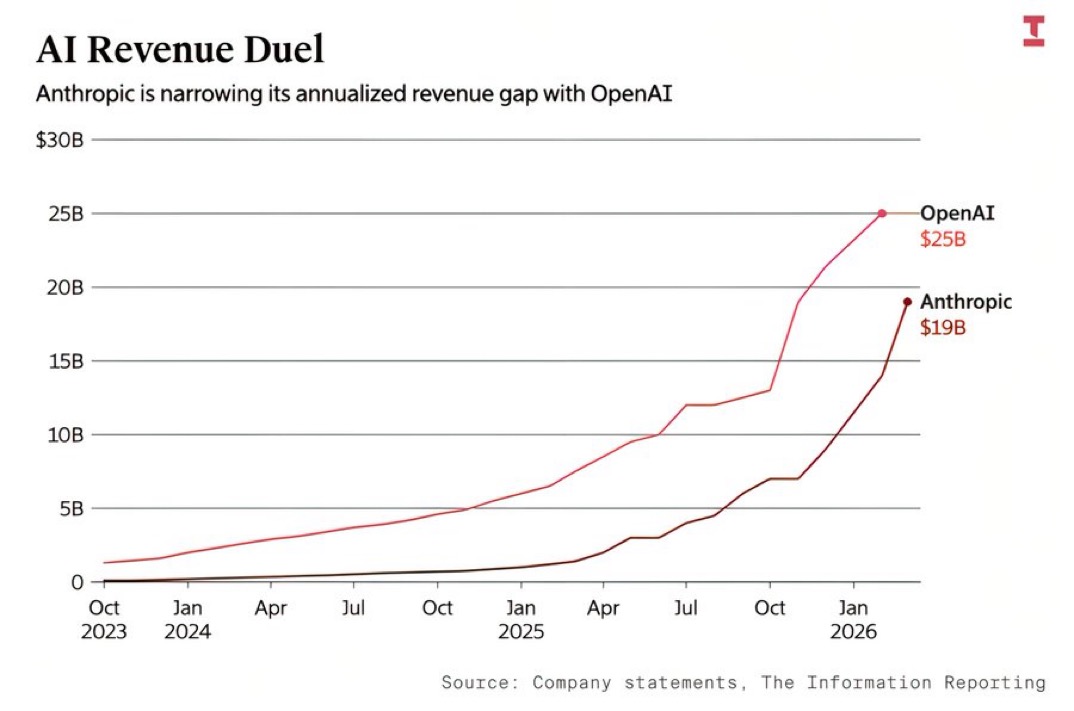
Short-term, OpenAI wins the $200 million government contract. The firm probably long term too with lots more government gravy in the future, especially if the leadership continues to donate money to the administration. Short term, Anthropic loses the government contract worth only 0.36% of this year's estimated revenue, but long term, Anthropic probably wins too due to good publicity and greater branding based on principles.
I suspect Anthropic comes to some sort of compromise with the government for growth. The government doesn't want to lose the global AI race by handcuffing one of its top players.
After getting over the fact that both companies freely took the work of authors and publishers to train their models without attribution, I decided the only ways to deal with AI’s theft were to invest in them and learn how to use the tools. So as a shareholder for the past several years, I want both companies to win.
Both companies are GPU constrained due to extraordinary demand, so really, Anthropic's lost government contract will easily be replaced by potentially easier and more profitable customers.
In the war of business, there will be plenty of future battles between these two giants. Regardless of who is pulling ahead at the moment, Bay Area homeowners and landlords get wealthier. The entire AI LLM pie is growing.
Firsthand Experience Of AI Companies Boosting Rents
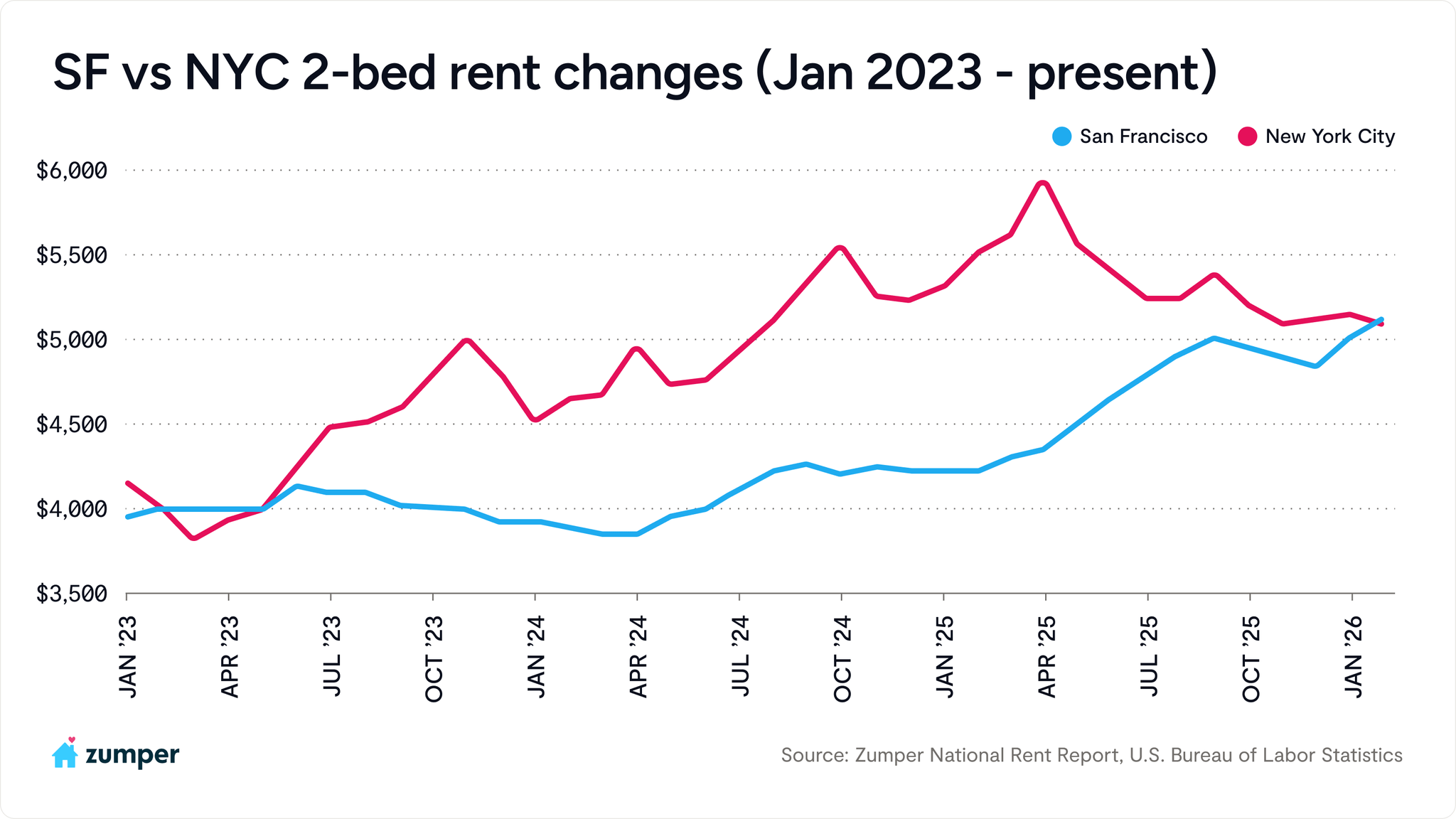
I see the impact of AI growth with my newest tenant working at one of the two AI LLM companies. They are so wealthy that the couple is happy to pay $10,000 a month in rent for a five-bedroom house.
As a frugal person, I initially could not believe this young couple wanted to pay so much. They are nice people and told me they wanted two home offices and a home gym. I looked at their finances, and I decided that if that's what they wanted, that sounds good to me.
When his AI company goes public, I assume there is a 70% chance that within two years the couple will want to upgrade to something even nicer or buy a place of their own. Their newfound liquid wealth will drive real estate competition higher.
I see it as clear as day, and there is no stopping the trend at the moment.
The AI financial boom is likely going to be a 10-plus-year trend. And as an investor, it is important to invest in trends and hold on for long-term wealth creation. If you properly identify a trend, there is no need to trade in and out of positions. Just keep investing.
The Cities That Should Benefit From AI The Most
If AI is a 10-plus-year wealth creation cycle, then geography matters. Wealth always clusters.
Oil clustered in Houston. Finance clustered in New York. The internet clustered in the Bay Area.
AI will do the same.
If you want to run the picks-and-shovels real estate strategy, these are the cities that should benefit the most.
1) San Francisco / San Jose (The Bay Area)
Let’s start with the obvious.
OpenAI is headquartered in San Francisco and is now valued around $760 billion after its latest funding round. Anthropic is also headquartered in San Francisco and recently raised at roughly a $380 billion valuation. Scale AI, Databricks, Perplexity, and dozens of well-funded AI infrastructure and application-layer startups are based here.
Here are the best neighbors in San Francisco to buy houses for AI employees. You want to buy on the west side where there is more peace and quiet, more land, more value, and more space overall.
Then you move 50 minutes south to the San Jose area.
NVIDIA, headquartered in Santa Clara, is worth well over $1 trillion. It is the picks-and-shovels provider of the AI gold rush. Without NVIDIA chips, none of this works.
Google and Meta sit in the broader Bay Area ecosystem. Between public market caps and private valuations, you are easily looking at multiple trillions of dollars of AI-related enterprise value concentrated in one region.
When even 5% – 10% of that value becomes liquid through IPOs, secondary sales, or stock compensation, that money has to go somewhere.
A lot of it goes into housing.
The Bay Area has the talent density, the venture capital base, the IPO pipeline, and the structural housing shortage. That combination is incredibly powerful.
This is still the epicenter. If you want to improve your chances of getting rich or meet someone who is rich, move to where the opportunities are greatest.

2) Seattle, WA
Seattle is quieter, but do not underestimate it.
Microsoft is headquartered there and has invested tens of billions into OpenAI. Microsoft’s market cap is north of $3 trillion. Even modest AI-driven earnings growth translates into enormous dollar gains.
Amazon is also headquartered in Seattle and continues to build AI infrastructure through AWS. Cloud computing is the backbone of AI deployment.
When Azure and AWS sell more AI compute, profits rise. When profits rise, stock-based compensation rises. And when stock-based compensation rises, people upgrade homes.
Seattle may not get the flashy startup headlines like San Francisco, but it has the balance sheet power. Large-cap tech wealth compounds more steadily and predictably.
That is great for real estate.

3) Austin, TX
Austin is the migration play, which I've been writing about since 2016 when I published my post on investing in the heartland of America.
Lower taxes. Lower cost of living. Business-friendly policies.
Oracle moved its headquarters there. Tesla has major operations there. Venture capital has increasingly flowed into the region. Several AI startups have opened satellite offices to tap into talent without paying Bay Area housing prices.
Austin does not have trillion-dollar AI headquarters concentration like the Bay Area. Although, SpaceX, worth potentially $1.75 trillion is based in Starbase, Texas, about 300 miles away from Austin.
Austin inbound tech workers. And when high-income tech workers relocate, they buy houses.
Austin already experienced a massive pandemic boom. Now real estate prices are falling given the glut of supply built when interest rats were low. However, by the end of 2026, the supply should be mopped up as the city experiences rent and property price pressure again.
If AI compensation accelerates, it provides another layer of support. You do not need headquarters dominance if you have talent migration dominance.
Personally, I'm dollar-cost averaging in Fundrise's real estate product, as it has properties in Austin and other cities in the Sunbelt, where valuations are lower and yields are higher. I expect pricing pressure to pick up at the end of the year and go through a multi-year rebound.

4) New York, NY
New York will benefit differently. It will not necessarily dominate foundational AI models. But it will dominate AI monetization in finance, media, and enterprise services.
As more of these AI companies go public, more fees will go to NYC-based investment banks that take them public. Year-end bonuses therefore get bigger. Ah, the good old days of banking!
Wall Street firms are aggressively adopting AI to increase productivity and reduce headcount. If banks can cut 10% of staff while maintaining revenue, bonus pools do not disappear.
They concentrate. Concentrated bonus pools drive Manhattan and Brooklyn real estate.
In addition, there is a growing fintech and AI startup ecosystem in NYC, especially in legal tech, financial modeling, and enterprise automation.
When finance adopts a new tool, it adopts it at scale. And scale creates wealth.
Please At Least Get Neutral Real Estate
If you live in one of these cities, I highly suggest you get neutral real estate by owning your primary residence. The demand for real estate is about to heat up again.
I recently visited a dozen open houses and spoke to several real estate agents on the west side of San Francisco. They all agree that supply is unusually low. Further, a couple of agents mentioned they have never seen this much demand before.
They attributed the demand specifically to the AI boom. They said buyers are getting off the sidelines to buy homes before the big AI firms go public. Further, they talked about their clients who work at these private AI companies getting some liquidity through employee share sales in secondary offerings.
If you plan to live in the city for at least 5–10 years, do your best to find something you enjoy. Be careful about getting into a bidding war, as you could let emotion make you pay more than you comfortably should. Try to look for homes with an ocean view or a big lot, or both. Location is always paramount.
With real estate, you do not need to decide whether OpenAI outmaneuvers Anthropic or whether NVIDIA maintains dominance. You just need the overall pie to grow.
When trillions of dollars in enterprise value are concentrated in a handful of cities, housing demand follows. Liquidity follows. Private school and private club waitlists grow. Luxury remodels skyrocket.
That is why buying real estate in AI boomtowns is the ultimate picks-and-shovels strategy.
Let the engineers fight it out.
You own the land they ultimately want to buy.
Readers, do you live in a city with a growing number of AI companies? How are you planning to profit from AI to escape the permanent underclass? How is the real estate market shaping up in your city? If you live in an AI boomtown, how are rents going?
If you want to achieve financial freedom, you can join 60,000 others and sign up for my free weekly newsletter. Everything I write is based on firsthand experience and knowledge. Fundrise is a long-time sponsor of Financial Samurai as our investment philosophies are aligned.

The point about not needing to pick the winning AI company is compelling. Real estate can provide exposure to broader economic growth without having to predict which individual firms will dominate. It will be interesting to see how cities attracting AI talent experience changes in housing demand, commercial development, and long-term investment opportunities over the next decade.
hi sam! shocked at how low company investment has been in los angeles. given LA’s high homeless rates and challenged economy due to entertainment/media industry shrinkage, how do you weigh this against the nice weather? would you advise people to buy, stay put, or leave?
Hi Sam! Another great insightful article! Where would you park house sale proceeds while renting temporarily and hunting for the next AI-beneficiary house? Would a mix of treasuries and high-dividend ETFs make sense?
Yes, makes sense. In fact, the 10 year bond yield at 4.2% right now. Looks extremely attractive, especially after positive inflation numbers today.
I’d caution against NYC with Mamdami’s election. Anyone who owns businesses or private properties there is in danger of his socialist overreach.
True. Or maybe there are better deals to be had now, and when Mamdami’s is voted out, there will be a rebound.
My wife and I have been investing in Seattle real estate for the past 15 years and prices have consistently risen. On the demand side, MS and AMZN are two of the largest cloud computing companies in the world, while the local geography naturally constrains supply. Also the Seattle City Council is doing us huge favors with the passage of regulations that are driving away mom and pop landlords restricting supply as well. We also have one of the top public Universities in the Country right in our backyard which is a natural source of software engineering talent. The median price of a home is roughly half of the Bay Area. We tend to lag the Bay Area 10-15 years when it comes to rent and home prices. However that gap is narrowing every year.
Sam, We sold our 4bedroom/4bath home with view of the bay in San Carlos and bought a 4 bed/4 bath in Burlingame flat lot 6,000 sq lot in and excellent school district, walking distance to shopping/dining and schools .1/2mi to hospital. I love Burlingame as much as you love SF. We’re in our 60’s and LOVE The Bay. You can’t beat the weather. I agree still cheap international market compared to London, Paris and the rest.
Congrats! When did you buy and how was the competition?
Burlingame is lovely.
Sam, We bought in Nov 25′. There were 23 packages out and 8 offers. So fierce!
I study the market and also reviewed the listing agents listings and sale prices.
The home went $855k over ask but the lis price was not real to start with. While I
don’t think to was a deal. It was market value. And to your point I think it’s good investment.
Hot market in November! Amazing. You’ll be pleased to know, the San Francisco Bay Area real estate market is event HOTTER in 2026. I can’t believe it, but it’s true. There are more buyers out now than ever before.
What do you think about the risk of AI reducing high-paying tech jobs & dampening the RE market?
If AI replaces a large portion of white collar jobs, who will be able to afford high rents? As a landlord with several properties leased to Class A tenants, that is what worries me.
Great article. I think it takes a lot of younger people that are very focused on career and income growth a long time to realize how much easier it is to grow your wealth by just owning a good piece of real estate for a long period.
In case other readers are interested, i’d love if someday you’d do an article about relocating to a major US city at various points in your life (e.g. early career, mid-career, retirement)!
Feel free to share your thoughts about relocation. I always welcome reader perspectives.
Related posts:
The Proper Geoarbitrage Strategy
The Digital Nomad Lifestyle Is Worth Living
The Unhappiest Cities In America Based On A New Wealth Reality Ratio
I copied Jeff Bezos and moved from Seattle to Florida (well technically South Georgia). Cashed in my funny money and bought a home for half price. Seems like Zuckerberg, Larry Page, Sergey Brin, Peter Thiel and Larry Ellison agree. Maybe the workers will continue to move to SF / SEA, but I’ll follow the billionaires to the southeast.
I am so thankful for my house and my real estate holdings that I’ve purchased over the past 15 years. I don’t think about the volatility because I don’t see it. And the Landscape on inching higher overtime. Safety, stability, and semi passive income is a good combination. Especially during times of war.
Hi Sam, long time reader and appreciate your insight. What do you think of highly desirable real estate markets such as Newport Beach, Irvine, Laguna Beach etc.?
Somehow just managed to get a 2bed,2ba with Bay (Alcatraz) views in Russian Hill. Hope you’re right! I do feel like I timed the market perfectly before these big AI companies go public, which seems imminent. When all that liquidity unlocks for employees / VC’s the market will go crazy (it already is crazy).
Sounds like a lovely place. Congrats! How was the competition? And at what price point?
Interesting article I appreciate you sharing. I would think getting long luxury property in desirable markets would also be a way to play the theme…think waterfront or high end in Miami.
Sam,
Did you make that pre-listing window for VCX!? Fully subscribed in less than an hr!
Should’ve had my AI agents flagging that email. lol. Maybe I’ll have to pivot to real estate in the Bay Area!. PS – You going to nibble at the Robinhood Venture fund at all?
GLTA.
– Sky
Sadly, I was too busy soaking in the hot tub and relaxing, and missed the e-mail that came out at 10:00am PST. But I already invested more than $10K a couple weeks ago, and had another option to invest as well.
Shutting the window in 1 hour is incredible. It signifies the demand is overwhelming. The percentage chance VCX trades at a premium to NAV is going up. But of course, still no guarantees.
I’m not buying RVI, but will have a post discussing it this week.
Exciting times!
10:00AM hot tub session on a Monday! This life chose you.
Sam,
Instead of just focusing on RVI, why not provide your readers with your take on interval funds overall, looking beyond Fundrise in this space.
We’d love your thoughts on RVI, but what about ARKVX and other similar public/private funds out there – all racing to raise assets (which, let’s face it, has not been focused on enough with Fundrise and this latest asset gathering exercise they’ve embarked on by listing).
Pros, cons, fees, the usual and whether investors should be concerned (like we’ve seen in credit markets lately) about retail piling into these offerings without sizing them appropriately in their portfolios or thinking about investing with a LT mindset.
Sounds good to me. Do you mind writing up your thoughts and research about ARKVX? After Cathie Woods torched so much value during the pandemic, I haven’t focused on her products.
As a retired dad with young kids, there is only so much I want to write. So getting this part of you and other readers to pitch in their thoughts is very helpful. Thanks!
AI certainly is here to stay and I’m glad I’m diversified. Although I should probably expand into even more investment types. I do love real estate and I’m glad to be a homeowner. It’s a wild time in the markets and the world today and it feels like the only certainty is change.
Sam, what do you think about Sherman, Texas? They are building massively be chip plants for Texas Instruments and Samsung. Does this look like a boom area?
That is indeed a boom area.
Correction –
Texas Instruments is in Sherman, TX (near Dallas).
Samsung is in Taylor, TX (near Austin).
MP, I think you meant GlobalWafers instead of Samsung. GlobalWafer opened a facility in Sherman, TX.
All expansion areas will be be boom areas, especially in low-cost cities in Texas. The impact of new factories has a disproportionate impact on smaller cities than on big ones.
What do you think about possibility of real estate price depreciation because of A- Indian tech immigrants future uncertainty, B-mass layoffs by tech companies claiming their workers are getting replaced by AI ? Most buyers in San Jose and Seattle area are wealthy immigrants who are now opting to sit on the sidelines given the administration policies and job uncertainty.
Definitely could be a negative. But I think in a capitalist society, I think these big tech farms will want to hire as much cheaper foreign labor as possible to boost profits.
Just look at the Canadian government, and how it allowed unlimited foreign buying to drive up home prices way out of reach for locals. If people think the United States real estate prices are expensive, go look at home prices in Vancouver and Toronto and the other big cities and then compare it to wages.
Americans who have never left the country and who have never looked at foreign real estate do not know how cheap and good we have it here.
San Francisco, for example, faces both a strong domestic and international foreign buying curve. I’ve been in the trenches against country men and foreigners alike, trying to bid for houses.
Now, with geopolitical uncertainty, there will likely be more foreign capital fleeing to safety, which is the United States of America.
Where do you own real estate? And what are you seeing in your neck of the woods?
See: https://www.financialsamurai.com/what-if-the-u-s-housing-market-turned-into-the-canadian-housing-market/
Bay Area, Coastal CA, Florida, and other areas with good weather may benefit as people all lose their jobs and go on universal income + savings from the “Before Times” but if AI is deflationary as a whole, nobody can get mortgages anymore from earned income, and they don’t need to leave in areas near where the jobs are (since there won’t really be many jobs) I would expect home prices to come down quite substantially.
I was thinking about that as well. But it’s really a timing issue. Perhaps millions of jobs get destroyed first, but then millions of more jobs are created.
And given only a tiny percentage of the housing stock is available for sale at any given moment in time, there is a real possibility that the rich simply get richer by accumulating all the housing stock there is available whenever it comes up for sale.
Where do you live in own a home? What are you seeing in your market?
I think the new jobs created for humans from the AI changes to the workforce won’t number in the millions, won’t be taken by the people losing the current jobs, and won’t last long-term as AI will continually be improving itself rapidly.
I live in the DC suburbs and own a condo but I lived in San Francisco for 12 years and made some money as an owner-occupier of condos in SoMA (2011-2018ish) before I sold them, left town, and before they came down in price.
I go back and forth between wanting to sell my current condo for about the same market price as when I bought a few years ago to become debt free and get my down payment back and thinking maybe there’ll be a debt jubilee on mortgages when most people don’t have income for it anymore.
I also think people will spread out and not live near the current mega job centers anymore unless they have other ties to them (some variation of your old heartland theory, but not for Trump/Political reasons). We don’t have a shortage of land in this country, just a shortage of land in nice neighborhoods and suburbs within commuting distance of high-paying job centers. But jobs are going away.