
I love startups and entrepreneurship. My obsession started when I was reselling Nerds candy in Taipei, purchased from the U.S. commissary store. To recognize and exploit a pricing arbitrage as a nine-year-old felt like winning the lottery every time a new batch arrived.
In 1998, a year before graduating from William & Mary, I was offered a chance to work at my father's friend's eyeglass parts factory in Shenzhen, China. The proposal was to be its manager and partner to expand into the country. China was finally opening up, and I had seen the rapid change firsthand as an exchange student in Beijing in 1997.
But I was nervous. I knew nothing about the business. Instead of taking the adventure of a lifetime, I took the sure thing: an international equities job at Goldman Sachs in New York City. Ever since, I've carried a mix of curiosity and mild regret. How would my life have turned out had I jumped on that entrepreneurial path in 1999?
Launched My Own Startup In 2009
In 2009, I decided to stop stalling and start Financial Samurai. I figured if I was going to get laid off during the global financial crisis, I might as well build a backup. I never did get laid off, so I burned the midnight oil after hours.
That's when I started writing about FIRE and my plan to escape, which I finally did in 2012. Today the FIRE movement has grown worldwide, though as a founder I never fully capitalized on it.
I chose the bootstrapped lifestyle business over the VC-backed route because I no longer had the required motivation to seek maximum growth and profits. Jumping back into the fire and grinding for 12 to 15 hours a day was not appealing.
Being truly FIRE makes you a bad entrepreneur. You left your job because you weren't financially motivated, and that doesn't change. Turning Financial Samurai into a NerdWallet and aggressively pushing high-interest credit cards to maximize earnings felt bad. I mainly wanted to write about life, so I did.
Living in San Francisco since 2001, you can't help but catch the startup bug. I lived through the dot-com bust, the Facebook and Google IPO era that minted thousands of new millionaires and drove up real estate prices, and now the AI wave creating fortunes all over again.
Meeting Startup Founders Will Make You A Believer
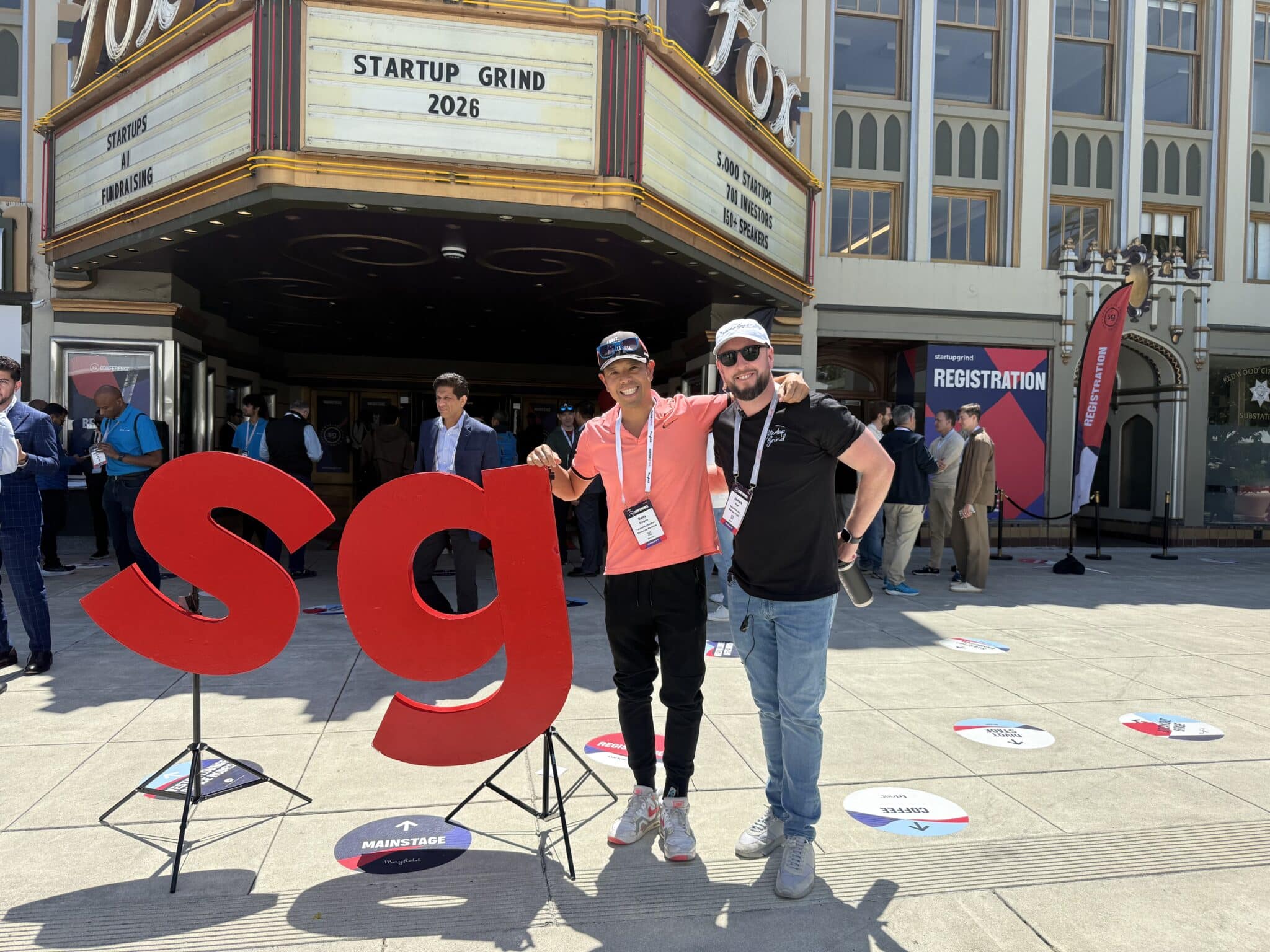
Recently, I attended the 2026 Startup Grind conference at the Fox Theatre in Redwood City. A golf buddy, James Gee, whom I met at a monthly Orrick/Vouch golf tech outing, was one of the organizers. James is Irish, can hit 320-yard bombs, and fell in love with startups, so we made a natural connection.
As someone who invests in private companies, is an LP in multiple venture funds, and has operated a private company since 2009, I love this conference. You should go to the next one.
I usually don't sit in on more than one presentation a day, preferring to chat with people individually. But the lineup was so strong and the information so compelling that I ended up attending five presentations over two days. I also didn't tell anyone I was going, wanting the freedom to move at my own pace after dropping off the kiddos at school.
Two major takeaways stood out.
First, if you are a builder or venture capitalist, you have to be in the San Francisco Bay Area. The energy is electric and the connections are endless. From waiting in line for an acai bowl to playing poker at a random networking event, you never know who you'll meet. There is no replacing in-person relationship building. If you're not where the action is, your chances of breaking through are vanishingly small.
Second, I am now firmly an “AI maximalist,” and you should consider becoming the same. An AI maximalist believes AI will completely change the world. Although I've been investing in private AI companies since early 2023, after realizing my editor father of 15+ years became expendable after ChatGPT launched, I hadn't been entirely sure whether I was just living in a bubble. This is despite hundreds of readers of FS giving me their perspectives over the years.
However, after attending Startup Grind, I'm convinced: the rest of the country is not focusing nearly enough on AI. As a result, I'm not sure they are ready for what's coming.
Key Takeaways From The Startup Grind Conference
Let me expand on the two points above and share several more.
1. Grit matters more than intelligence.
Smart and motivated people are everywhere. High intelligence is standard among startup founders. But since AI is now the most intelligent tool available, what matters more is investing in founders with the grit to get things done.
Those who refuse to take no for an answer, who absorb feedback and keep iterating, make the most progress. You can never truly fail if you never quit. Be willing to pivot or start over if you hit a roadblock.
2. You have to be where the action is.
Saving money by living in a low-cost city is fine, but you can only save so much. You must focus on growth, and growth happens where companies, human capital, and financial capital are already concentrated. It’s the same concept of aggressively investing in growth stocks over dividend stocks when you’re not yet FIRE.
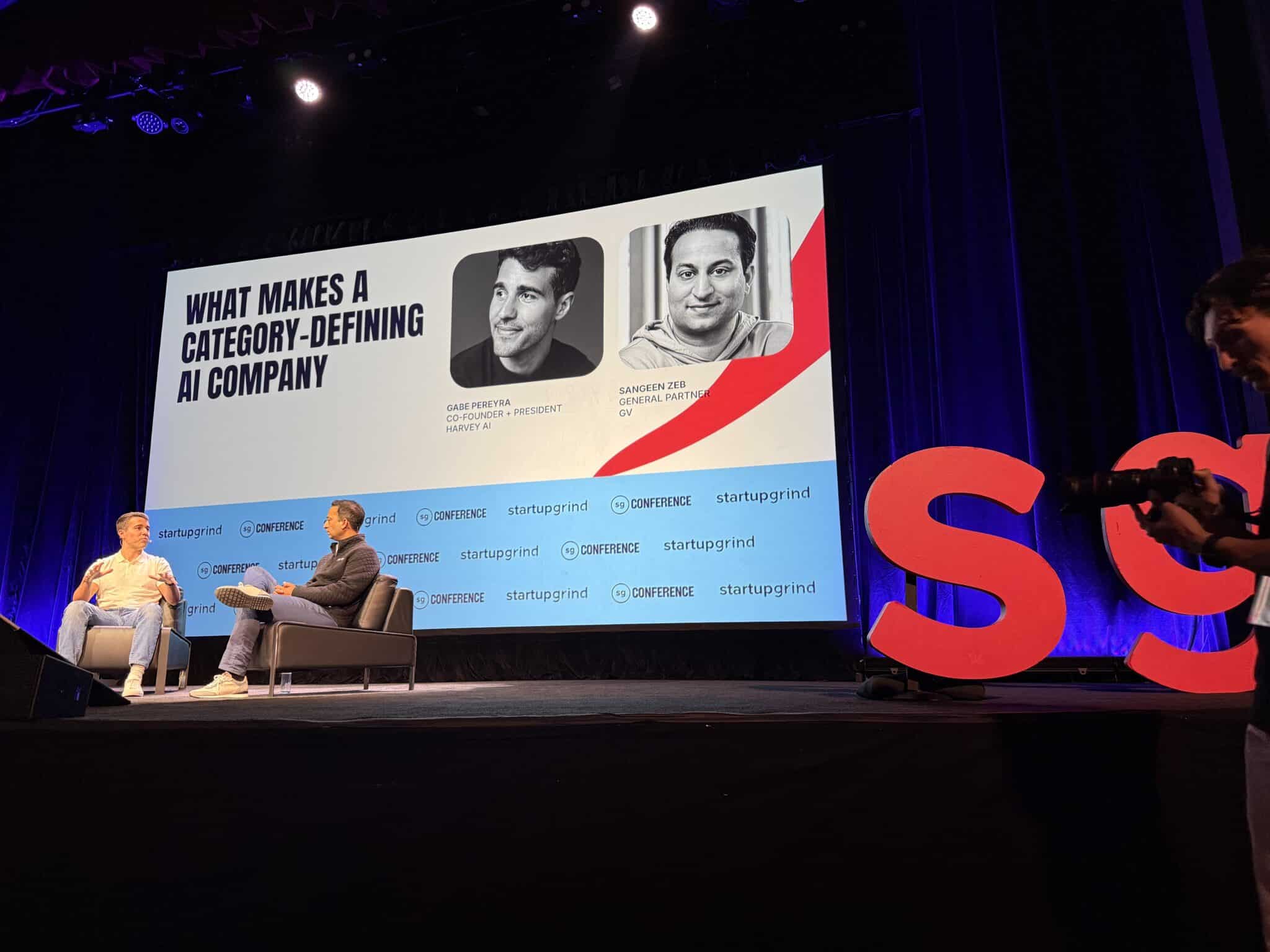
For example, Gabe, the co-founder of Harvey AI, a legal AI company I'm invested in through a fund, relocated from LA to San Francisco because they needed to be in the AI mix. Without that move, he doesn't think he would have grown the company to its current $11 billion valuation. Gabe mentioned he still sleeps on the mattress on the floor of his apartment with no bed frame because there wasn't the proper insurance when the movers came.
So much about building a successful company and growing outsized wealth is due to luck. However, you dramatically increase your luck by being where all the action is.
3. The first three to five seconds are everything for capturing attention.
Attention spans are shrinking. Whether it's video or writing, if you can't hook the viewer or reader in the first three to five seconds, you've likely lost them for good according to James Dumoulin. This is something I need to work as I tend toward long-form content with much deeper analysis.
I attended YC Demo Day in June 2026 and I was pitched to 1×1 relentlessly as an investor with a purple lanyard. You need to speak with confidence and capture someone’s attention in the first 7 seconds.
4. Hire for agency and taste, not pedigree.
Their background doesn't matter as much, said Amjad, CEO of Replit. Agency and genuine taste are what stand out. Since it's much easier to build now due to AI, hire people with an entrepreneurial spirit.
5. Build AI-native or don't bother.
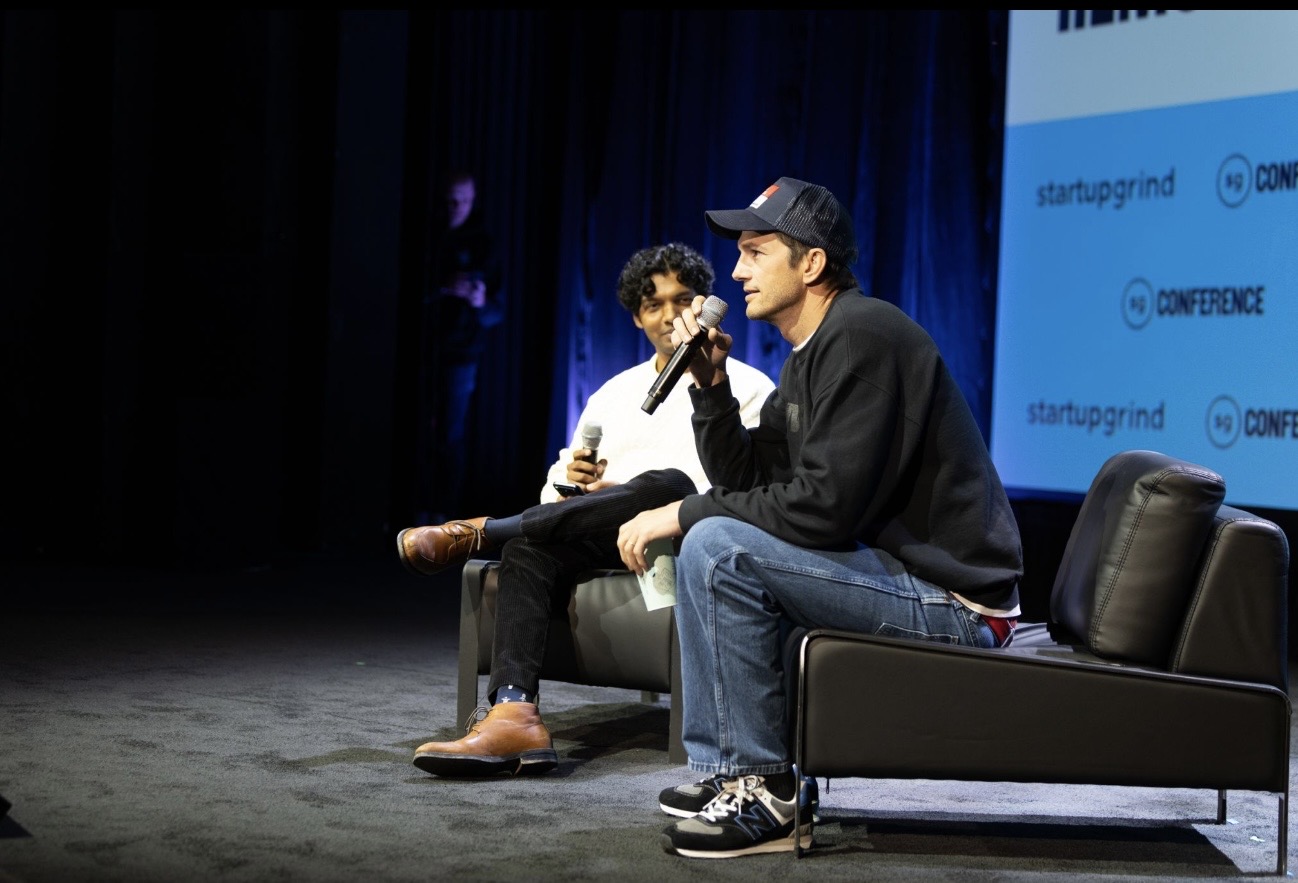
Ashton Kutcher, actor and GP at Sound Ventures, was onstage with Warp CEO Ayush Sharma discussing the speed of change. AI-native companies can build faster and pivot more easily than legacy companies burdened with headcount and outdated systems. Eoghan McCabe, CEO of Fin.AI, interviewed by Kleiner GP Ilya Fushman, held a similar view.
This has important implications for investors. It's hard to get excited about large, publicly listed SaaS companies, even though valuations are more compelling. It could take years for them to clean house, by which time AI-native companies will have lapped them. Please beware of value stocks, as structurally, their terminal values have changed.
Sadly, it's hard to get excited about any private company that isn't AI-native. I have portfolio companies in a couple of venture funds that are growing well, but I feel zero enthusiasm for them. AI-native companies are simply growing far faster, and I suspect other investors feel the same. The bar has changed.
6. International builders are driving the AI wave.
At poker and networking events in San Francisco, I've noticed the vast majority of attendees are foreigners and technically-oriented employees. The Startup Grind conference reflected the same, but they are the founders.
These are the founders who naturally hire people similar to themselves, and if these are the “best and brightest,” it's no wonder top universities consistently admit a large share of international students: roughly 38% at Columbia, 24% at Stanford, and 18% at Berkeley. We must accept this trend.
If you are American and want to compete effectively, you need to be an American nerd with maximum grit. Otherwise, you have no chance. The smartest and hungriest people from around the world are coming to the SF Bay Area to build.
7. Most people haven't invested enough in AI.
I thought allocating up to 20% of my investable capital to private AI companies was aggressive. In retrospect, I should have put 60% into private AI and the rest into the S&P 500 and public companies instead. I simply haven't been bullish enough.
And to be fair, accessing private AI companies is difficult. You need to know someone to get into a round directly or find the right venture fund with the right focus. Then once you commit capital, you can't go back and commit even more capital if you notice the GPs are investing in great companies.
Thankfully, I invested in Fundrise's venture product back in 2023, given I've been a partner of theirs since 2015. But like any investment that performs well, you always wish you had put in more. Here's hoping they launch a new venture product in the future.
Today's Founders Are Genuinely Inspiring
Seeing founders full of energy, willing to work seven days a week for 10-plus hours a day, is motivating. I worked 60-plus hours a week for 13 years and burned out.
Now I spend about 12 to 15 hours a week on Financial Samurai, which is a walk in the park in comparison. But I know the correlation between hard work and reward is real. It's odd to hear young people working only 40 hours a week or less complain that they can't get ahead, when there are these smart startup folks working 80 hours a week.
The total addressable market for AI is the entire U.S. labor force, valued in the trillions. We don't know which companies will win, but the ecosystem will keep growing, which is why real estate is a fundamental way play AI's growth.
I'm an AI maximalist now, in part thanks to meeting the people building the future. I plan to invest more aggressively going forward, at least for my children's sake. Because if I don't invest for them, nobody will.
Readers, anybody else an AI maximalist? Do you think the SF Bay Area is living in an AI bubble? Or do you think the rest of the world is living in an AI bubble, not ready for what's about to come?
Get a Free Financial Analysis From Empower
Building or investing in startups means nothing if your own finances aren't in order. Use Empower, the web's #1 free financial app, to track your cash flow, x-ray your portfolio for excessive fees and hidden risk, and plan for the future with their retirement calculator. The more clarity you have on your finances, the better positioned you'll be to take advantage of the AI wave ahead.
I'm mailing signed copies of Millionaire Milestones to anyone who takes advantage of Empower's free financial check-up this year. I've done it three times over the past decade and each session has sharpened my thinking. Full details and instructions are in this post.
Financial Samurai is a promoter of the Empower Advisory Group, LLC (“EAG”), and is not currently a client.
If you enjoyed this post, you can sign up for my free weekly newsletter. My goal is to help you achieve financial freedom sooner, rather than later.

Great post, Sam. I’m firmly in the AI-maximalist camp as well—the shift we’re seeing feels less like a bubble and more like a fundamental re-architecting of the economy.
I’ve had a similar journey with VCX (Fundrise Innovation Fund). It’s grown into a multi-seven-figure position for me, but because it took off so quickly, I wasn’t able to “fully load” the position to the level I wanted before the price moved significantly above NAV.
Now, I’m frantically researching where to put that remaining high-conviction capital. A few thoughts on the current landscape:
ARKVX (ARK Venture Fund): The lack of carry is a huge selling point, but as you mentioned with other SaaS plays, it feels a bit too diversified for a true “conviction” bet. It’s starting to feel more like an index.
GC Fund XIII: I just subscribed to this one to get more institutional-grade exposure.
Secondary Exchanges: I’ve scoured Hiive and EquityZen, but the spread and lack of transparency make them feel too risky for a major allocation right now.
Curious to get your take on the execution piece: Now that VCX is priced where it is, are you still adding to that position despite the premium? Or are you looking for a “VCX 2.0” or other vehicles to express that maximalist view without chasing the current NAV?
Looking forward to your thoughts.
I’m looking forward to VCX 2.0, if it comes.
I started buying DXYZ and RVI in April after VCX surged, assuming the enthusiasm would spread. However, the situation is interesting now with the Anthropic SPV warning, but for specific entities and exchanges it seems. VCX sold off on May 12, but came all the way back to even. Ironically, VCX could be an even more important source for Anthropic exposure with the other methods on shaky ground.
Great points on the secondary enthusiasm spreading, Sam. That’s exactly what gave me pause on DXYZ and RVI—seeing them trade at such a massive premium to NAV feels like chasing instead of positioning. You got ahead of that so kudos to you. If I’m going to take the risk of private equity, I want to capture that ‘private-to-public’ lift myself, rather than paying a 50%+ markup for the privilege of holding it in a brokerage account.
The recent legal noise around Anthropic SPV ownership only reinforces my hesitation with the exchanges. It’s one thing to pay a premium; it’s another to deal with potential ‘cloudy title’ issues on the underlying shares.
I’m effectively trying to ‘rewind’ the clock and find that VCX-style entry point in the private markets again before the public bid-up ruins the math. Even with direct VC access, the traditional ‘2 and 20-30’ fee structure is a tough pill to swallow—it takes such a massive bite out of this asymmetric bets.
ARKVX is definitely imperfect due to the lack of concentration, but at the moment, it seems like the cleanest way to play the theme without the carry drag. I’m also looking toward potential co-investment opportunities in General Catalyst XIII down the road to keep fees limited while placing higher conviction positions. I was interested in USVC until learning that most of it is a fund-of-funds with imbedded carry. So many landmines!
That must have been quite an exciting conference. I can’t even imagine how much will be changing in the coming years. So much in development so i’m trying to invest where I can!
What about the energy needed to power these data centers and AI. Should investors look at small nuclear companies and natural gas as there is less than a 0 percent chance wind or solar can produce the massive amount of energy needed? One interesting company in the private nuclear space is Radiant. Not sure if you are familiar with the company, but check it out
Interesting take on this. I hear about the power and water requirements but have not looked at it, but I agree that capturing the right avenue to power those facilities could be a solid boring avenue to pursue. I’ll be curious what FS says on it.
Electric Utilities based on 35 years 1981 to 2015 working for a great UTE. All the talk about tech often ignores the applied tech that supplies your electric service every millisecond.
I completely agree; AI is transforming everything faster than we can even appreciate. From your posts, I decided to invest in Fundrise Innovation Fund a couple of years ago, so thank you for that. At age 72, not many of my peers feel the same, but I feel the changes will be more helpful for humanity than harmful, though highly disruptive. Can’t wait to see what is coming down the pipeline in biotech and pharmaceuticals. I’ll be needing that pretty soon!
So what are the easiest ways the rest of us can capitalize on AI since such a small fraction are publicly traded or even privately traded?
The mentioned funds are a good start but even those don’t seem to capture as broad a market as ai is looking to disrupt.
And what legacy companies do you see as having had moats and safety for decades being supplanted and outdated like Blockbuster in the face of Netflix?
The Mag 7 are stalwarts as well as the picks and shovels companies.
Maybe Apple will get its act together too.
What do you think?
Energy.
The railroads weren’t the big winners during their cycle, it was oil and steel.
Buy the commodity demand that everyone needs to build their business, no matter if they succeed or not.
Cool. Then you might be interested in the main Fundrise real estate product. According to Fundrise, it generated a 10.1% return in Q1, helped in part by opportunistic investments connected to AI infrastructure, data centers, and technology exposure.
On February 16, Fundrise announced that it made a senior secured bridge loan tied to the development of a large-scale AI data center campus in Texas. The project reflects the continued demand for power, infrastructure, and computing capacity required to support ongoing AI development. Of course, there are plenty of risks as well, so do your own due diligence.
Fundrise is a long-time sponsor of FS, and I’m an investor in Fundrise real estate.