
I write before my kids wake up and after they go to sleep. That's the arrangement. It means I'm free during summer, winter, and spring breaks, along with weekends, which is the whole point of building a lifestyle business in the first place. I gave up a handsome paycheck for the ability to always be the one at pickup.
I'd probably be far richer if I had kept grinding in finance after the kids were born. I'd also be more tired, more stressed, less healthy, and less happy. Their first five years flew by. Now I'm trying to bank as much time as I can before they turn 12, the age when kids decide their parents are no longer the main attraction.
The only reason I could make that trade is that I spent 18 years, from 1999 until our first was born in 2017, saving aggressively enough to generate passive income that covers our basic living expenses. Without it I'd have gone straight back to work and traded precious time for money.
We have built cities where raising children is expensive, complicated, and occasionally treated as suspicious. Then we act surprised when people stop having them.

What Childcare Actually Costs
Start with the national number. According to Child Care Aware of America, the average annual price of childcare is about $13,128. Center-based infant care runs roughly $1,230 a month, or close to $14,760 a year, because infants require staffing ratios of one caregiver to three or four babies.
Costs have climbed 5% to 8% since 2024 and about 23% since 2021.
The federal government says childcare is “affordable” at 7% of household income. Almost nowhere in America meets that standard. National medians put it closer to 19% for a single child.
Here's the number that should end the debate: in 85 of the 100 largest U.S. metro areas, childcare for two children costs more than the median rent.
The spread by state is enormous. Mississippi averages under $7,000 a year for infant care. Washington D.C. tops $28,000. Massachusetts and California land between $2,500 and $3,200 a month.

Then There's San Francisco Childcare Costs
The average cost of childcare in San Francisco is about $36,000 a year for one child. The range is anywhere between $1,900 – $4,000 a month depending on the child's age and type of program.
Thirty-six thousand dollars, after tax, per kid, before you've paid rent, before groceries, before anything. Two kids under five and you're spending $72,000 a year on the privilege of going to work.
At a 28% effective tax rate, you need to earn roughly $100,000 gross just to cover childcare for two. That's not a lifestyle expense. That's a second mortgage that doesn't build equity.
Is there any wonder why fewer big city residents are having children?
San Francisco Free Childcare: Who Qualifies In 2026
A family of four earning less than $230,000, which is 150% of area median income, qualifies for free childcare in San Francisco. Families earning up to $310,000, or 200% of AMI, get a 50% subsidy. Both cover kids under five at more than 500 city-funded providers. The 50% tier started in July.
It's part of the Family Opportunity Agenda, announced in January, and it's the most ambitious thing the city has done for families in years. The city is funding it with over $550 million, largely an unspent reserve from 2018's Proposition C, a commercial real estate tax. The program runs through 2032, at which point somebody finds new money or the whole thing sunsets.
Mayor Lurie put it plainly in his State of the City address: a family of four here needs to clear over $160,000 a year just to meet basic needs. Not comfort. Basics. Which is why the study saying a family of four needs $408,000 to live comfortably got mocked, and why the people mocking it don't have two kids in daycare here.
We don't benefit. Our daughter is entering first grade and our son is entering fourth. I'm still in favor of it. Families need the relief. Raising a child is hard enough without financial strain on top of it. I lived paycheck to paycheck for six months after buying our house in 2023 and it was a stressful stretch I'd like fewer people to experience.
But look closely at that threshold, because it's revealing. San Francisco has defined a family earning $230,000 as needing free childcare. In most of America, $230,000 puts you in the top 5% of households. Here, the city says you can't afford daycare.
That's not generous policymaking. That's a confession about the cost of living. It also lines up with what schools like Yale and MIT consider low income, where families earning under $200,000 a year now qualify for free tuition.
San Francisco Has The Fewest Kids Of Any Major City
Children make up about 13% of San Francisco's population, dead last among the 100 largest cities in America. New York is 21%. Chicago is 23%, which also happens to be the national average.
San Francisco has held this title for over two decades.
The school numbers tell the same story from the other direction. In 1970, San Francisco public schools enrolled 90,000 kids. In the 2024-25 school year, that number was about 50,046.
And it becomes a loop. Fewer kids means fewer playgrounds, fewer pediatricians, fewer preschool spots, fewer other families on your block. Schools lose enrollment, which loses them state funding, which degrades the schools, which pushes out more families.
The city optimizes for adults without children because that's who lives here, which makes it a harder place to have children, which means fewer children. Boom loop for the city's economy, doom loop for family creation.
A city commission survey once found 44% of parents with preschool-age kids planned to leave. That was twenty years ago. The trend has not reversed.

Compare That To Honolulu
I just spent 30 days in Honolulu with my parents, and the contrast is hard to miss.
Urban Honolulu runs about 16.5% under 18. Not a dramatic gap on paper, but the difference in feel is enormous.
Hawaii is not cheap. Infant care in the state averages $24,115 a year. Care for a four-year-old averages $13,992. Childcare can run 27% more than rent and eat 40% of a typical Honolulu household's monthly income. The state has its own Ready Keiki initiative trying to close the gap by 2032, and Lt. Gov. Sylvia Luke has said childcare was a top cost driver behind it.
So the money is comparably brutal. What's different is everything else.
Kids are welcome in Honolulu. Not tolerated, welcome. Restaurants make space. Strangers talk to your children warmly. The ohana concept isn't a marketing slogan, it's an actual expectation that extended family and community absorb some of the work of raising kids.
Nobody looks annoyed when a toddler melts down at a shave ice stand, because everyone there has been that parent or is related to one. It is common for two or more generations to live under one roof, helping with the child raising process.
Nobody in Honolulu asked me for a permit to teach my own son tennis. Just the other day I picked up my kids from Tree Frog Treks, a summer camp program at Golden Gate Park. They were having fun chasing the squirrels, when a grumpy old lady sitting down told them to stop playing.
Cost is likely the main reason why people don't have kids. However, whether the place you live acts like it wants them there also matters.

The Childcare Alternatives To Consider
Center-based daycare is the default, not the only option:
Nanny share. Split one nanny between two families. Usually lands 30% to 40% below a solo nanny and gives your kid a built-in playmate. The hardest part is finding a family whose schedule and philosophy match yours.
Au pair. A live-in caregiver on a J-1 visa. All-in cost including the agency fee and stipend typically runs well under center-based care for two or more children, and you get flexible hours. You also get a young adult from another country living in your house, which some families love and some do not.
Home-based family care. Smaller, licensed, usually cheaper than a center. Averages around $11,992 a year nationally versus $13,935 for center-based infant care.
Grandparents. Free, if you're lucky enough to have willing ones nearby. It's also the single biggest reason people move back to their hometowns in their thirties.
One parent stepping back. Do the math. If one parent nets $80,000 and childcare for two kids costs $72,000, that parent is working for $8,000 a year plus benefits and career continuity. Sometimes that's still worth it. Often it isn't.
That math has a second half nobody runs. If your household drops to one income, that income now carries everything, and a term life policy on the earner stops being optional. Policygenius lets you compare quotes across carriers in a few minutes. Do it before you make the switch, not after.
Homeschooling. Since we both didn't have day jobs, we homeschooled our kids for 18 months during COVID. They learned an enormous amount efficiently, and we spent that year and a half exploring the city together in a way we never would have otherwise. It remains one of the most rewarding stretches of my life as a parent.
Minimum Income Needed To Afford Outsourcing Childcare
Personally, there's no way I'm going back to work unless I'm earning at least 10X the cost of childcare. Anything less and I'm renting out my time at a discount.
Turns out the government is stricter than I am. That 7% affordability benchmark implies you should be earning over 14.3X your childcare bill before outsourcing the job. By that standard, a San Francisco family paying $36,000 a year per child needs to clear over $500,000. Too bad as a writer, earning that much is almost impossible, which is why I've been a stay at home father since both my kids were born.
Career or family is a brutal decision. The consolation is that it's not permanent. Preschool takes them full-time around age three, so you're looking at roughly three years per child, not a decade.
No Wonder Fewer Adults Are Having Kids
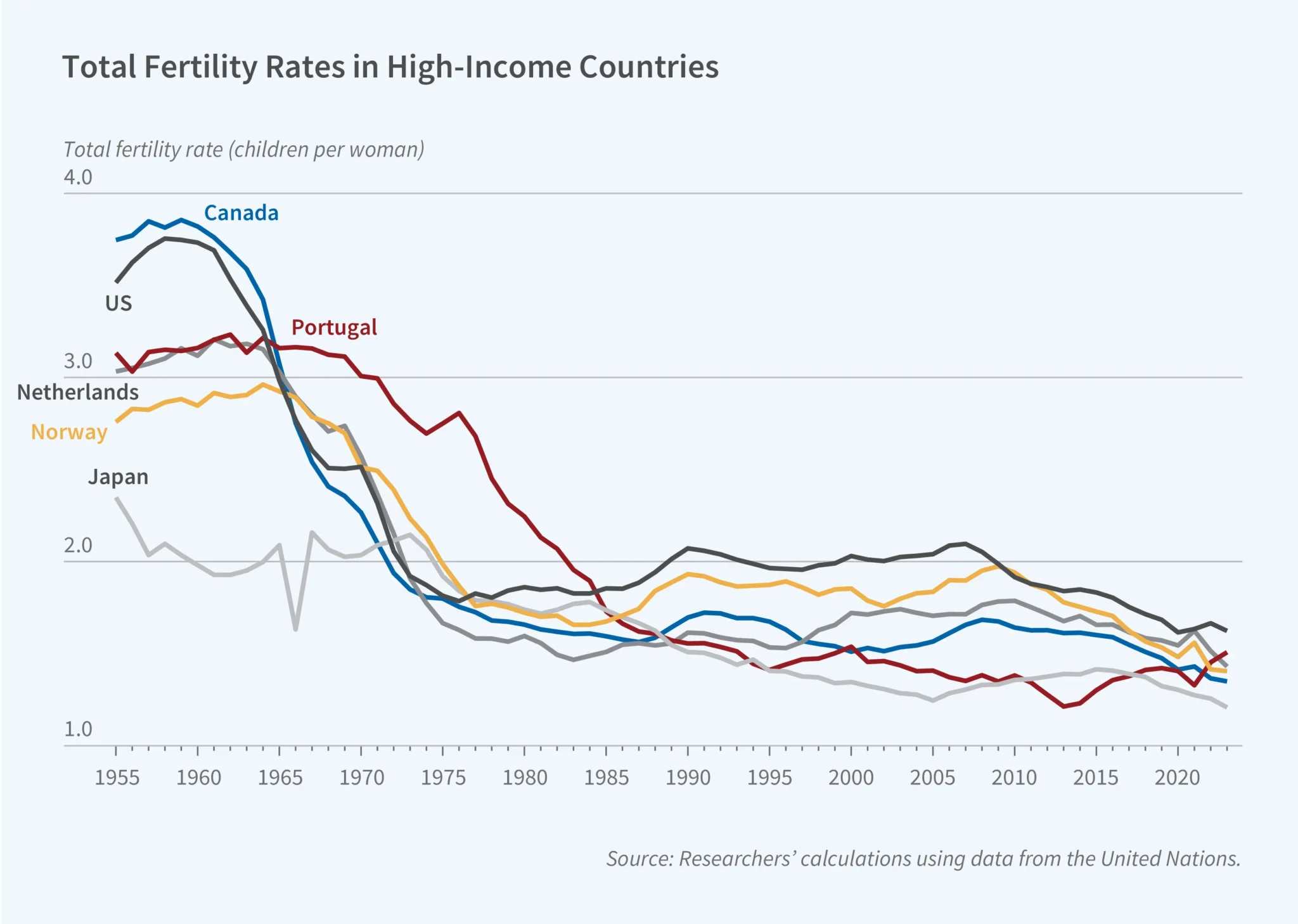
From Korea to America, fewer people are having children, and cost is a big reason why. If you can't comfortably rent or buy a median priced home, adding kids to the equation is out of the question.
I waited about five years too long to have kids because I had a net worth goal I wanted to hit first. I've only lived in New York City and San Francisco since graduating college in 1999, and both cities are damn expensive. The goal felt responsible at the time.
In retrospect, I should have gone sooner. I would have captured my company's parental leave benefits, and far more important, I'd have five more years in their lives. That's the trade nobody tells you about. You can always earn more money later. You cannot go back and be there earlier. That said, being an older parent does have its benefits. You can also make up for lost time.
Having kids is a personal choice and nobody gets to make it for you. What I can tell you is that they are the largest responsibility you will ever accept. Yes, they're expensive. And yes, you will occasionally get treated like a suspect for the crime of parenting in public.
They're also a blessing. My kids gave me a purpose after FIRE that no job ever did, which is to love them and raise them into good people before they leave the house.
Just go in with your eyes open. Know the cost of childcare before you commit. Know your alternatives. And think hard about where you do it, because geography matters. Some places make having a family easier. Some places make you fight for it.
The good news is that cities can change. San Francisco just committed half a billion dollars toward making it cheaper to raise a child here. That's real. Now it needs the other half of the equation, which costs nothing at all: acting like families are welcome.
Free childcare gets you the first part. Smiling at the dad on the tennis court gets you the rest.
Reader Questions And Suggestions
Readers, what are you paying for childcare, and how did you decide whether it was worth one parent staying home? For those who left an expensive city after having kids, would you do it again?
I'm writing a book about this, Your Children Will Be OK: Helping Them Navigate An Uncertain Future, out next year from Portfolio Penguin. It's about raising kids for a future none of us can predict, without going broke or losing your mind. If you want to know when it's out, my newsletter is where I'll say so first.
This post is about what kids cost while you're around. Life insurance covers the version where you're not, and it's the thing new parents put off longest. Policygenius lets you compare quotes from several carriers in minutes without a salesperson calling. If you've got children and no term policy, that's the best three minutes you'll spend this week.

We pay our nanny $35/hour, and we guarantee her 35 hours a week. I would need her even if I didn’t work because my kids have conflicting activities in the evenings and different bedtimes, and my spouse often travels for work. I learn less than 10x what we pay our nanny if you convert my time to hourly at 40 hours a week and compare it to her time. I’ve thought about quitting, but it wouldn’t solve the parenting challenges we have around conflicting kids’ schedules in the evenings. Also, if I quit, I probably couldn’t justify having a weekly cleaner, grocery delivery, and getting chef-prepared meals delivered that I just have to heat up. I’d rather do intellectual work than those tasks for now.
I just went back and looked up what it cost us for infant care back in the fall of 2016…$1,368/month!
The same care is probably at least $2000 a month now.
I just checked but could only find last year’s rate…$2,226! Crazy.
When we had our first son almost 28 years ago, we made the decision that I would work and my wife would stay at home and raise our son. Finances were very tight for a while, but we made it work. We also home schooled. Her mother was able to stay with us for a couple of years which also helped. We eventually had 5 kids and none of them had outside childcare. I eventually started an IT business and after a about 3 years, finances were no longer an issue. But we never had to deal with the hassle and expense of childcare.
I really wish more companies would step up and offer a childcare cost benefit. We were fortunate that my husband’s company had an onsite daycare that was exceptional. Also, the costs were subsidized by the company, so we paid a little less. (It’s been more than 10 years since my kids were in daycare so I don’t remember the exact cost.) It also allowed parents to attend daycare events – Thanksgiving lunch, holiday concerts, etc – or just go over for a visit very easily. Being in the DC suburbs, daycare costs were still expensive, but this helped a bit.
Sam, I love your position that parents stay home early in the child’s life and work later. My kids are almost 5:-7 and I feel I made the mistake of working early (using a nanny), but subsequently switched to being primarily being a SAHM with some flexible work after reading Erica Komisar’s books and your example. Will go back to career focus when the time feels right. We unfortunately have no family to help, but I would have loved involved grandparents (another reason to have kids younger and prioritize health!).
I think the government’s focus is too much on cost and not enough on the best outcomes for the children – which is usually being a trusted caregiver (ideally parent or relative), and not in a group daycare setting, which is stressful for babies and toddlers. How about more paid family leave (similar to Europe)? Or giving each family a choice how to spend the childcare funds?
Thanks for sharing. I read this quote about grandparents once,
“Active grandparents never want to stop being parents and uninvolved grandparents never wanted to be parents.” And I felt that.
As a strong proponent of FIRE, I am even more incredulous that some will choose work over raising their children for the first five years, IF they have the option. I just get no joy out of telling people what to do and sitting in on meetings after meetings.
The first three years before preschool go quick! There’s a lifetime of money making and meetings after the kids go to school full time.
But of course, to each their own.
We were dual income in Seattle, then moved to Dallas Texas. I increased my income and my wife quit her job. Now we have one kid, and another on the way. Kids are cherished here like I have never seen before in a community. My wife watches our kiddo, we spend $600 per month on babysitters for date night/appointments, and we spend another $250 per month for preschool, which is 3-4 hours twice per week. My luxury gym also has good childcare while I exercise, and church provides childcare during service and Bible studies.
Sounds like a good arrangement Scott. What are some main differences about Seattle and Dallas? Many have thought of the move to Texas to lower costs. But I don’t know anybody personally who has made the move.
Most costs are modestly lower. Gas is about $2 per gallon cheaper. House prices are way cheaper. I got a 3500 sf house 5 bedroom 3.5 bath with pool and movie theater for $665,000 in 2021. Property taxes are higher ~ 2%. Schools are much better, lot of cops and firefighters and highschool football stadiums, so you know where the property tax goes. No homeless, very low crime, the hail wrecks roofs every 8 years so home insurance is double over Seattle. Food costs are about the same.
Cool. How do you determine that the schools are way better? Public or private?
Well I did public and private school in Seattle myself, and the public schools were terrible, and the scores on Zillow reflected that. In Texas the schools near us gave great reputations in the neighborhood, and high scores on Zillow. Public seems great, but the private schools do seem better.
Scores on Zilllow are a very poor representation of the quality of schools. My wife has been a high school teacher for two decades, so she has a lot of insider knowledge about this. Those scores are almost entirely based on standardized test scores, but are not adjusted based on the demographics, English proficiency etc of the students. Families often base most of their decision on which town to live in from these scores, yet they tell you almost nothing about the quality of teachers and the quality of education you actually receive there. It’s also compared just within your state. Where we live in Massachusetts, an “average” school or even below average is likely a very high quality school still. In another state that does not prioritize and fund eduction as much that might be a different story.
People don’t like to hear it, but it’s true. It’s also true that higher wealth generally correlates with better school outcomes, so that school in an expensive neighborhood will generally always outperform one (on paper) in a less affluent neighborhood, almost regardless of the other factors. Schools are also hyper-local, so saying “Dallas schools are good and Seattle schools are bad” would obviously be an oversimplification and generally inaccurate.
Childcare is one of those costs that doesn’t really sink in until you’re living it. It’s easy for people on the outside to say “just do X,” but every family’s situation is different. It’s such a huge expense these days, but I also like how you framed it as buying back time and reducing stress, not just another bill. And that’s fascinating to hear on the SF initiative. I’d be curious to see how many families are aware of it and are actually taking advantage of it this year and going forward.
1000% .. we only have one child, not the only reason, but a big part. Once she started elementary school we couldn’t start over with a nanny or daycare all over again. There is a benefit to having one child though even outside of daycare. All our money and support and time isn’t shared with multiple children. We’ve been able to super focus on our only child’s sports. She’s actually a 3 sport athlete and we never could have managed that if another kid had similar interests. Driving her to practices 7 days a week at hour round trip commutes on top of work schedules would never be possible with multiple kids.
Yes, something has to give.. there is dilution for sure about the amount of time a parent is able to spend with each child.
But oh how I wish I had many more children, like 4 or 5 or 6. They are such a blessing.
IMHO parents of young adult (20s-early 30s) families and grandparents that are capable should consider helping with grandchild childcare/childcare costs, rather than passing on a “legacy” after they are gone. Hopefully everyone lives a long healthy life, which means grandparents pass when their (few?) grandchildren are adults.
My kids are still young, but I imagine I’d be willing to pay for childcare for grandchildren if cost was the limiting factor.
Sam, I want to preface this by saying that I love your content and don’t want you to think I’m always criticizing. Now that that’s out of the way, here’s the problem with this argument: “rich” countries with lots of subsidies for childcare do NOT have higher birth rates, and “poor” countries with little to none have the highest. The key, that doesn’t show up in the data, is similar to “imputed income” in the form of free family help – traditional, caring, family-oriented help from in-laws, aunts, uncles, etc. Perhaps this is a culture problem, and not a money problem. We have forgotten how to raise families, prioritize what really matters, and help one another.
T, this is hard to do when you live 3000 miles away from your family. I think the US encouraged for decades college kids to move away for college across the country. They rarely return to home and build roots where jobs take them. Then when you settle down 3000 miles away you don’t have the support of your parents, aunts and uncles. I don’t think we’ve forgotten.. I think for generations we sent kids WEST to build a home, and forget their past. That’s been a sign of success in the US. Staying home after college or staying in your hometown in media and movies made you lose in the game of life.
You’re right, of course – that’s been the modern social norm. The question is – what was lost? And while I would frame it as love, support, a caring family community, if you want to get down to the nuts and bolts of it – you are losing thousands and thousands of dollars of free help from your family. How much more are you making by moving 3,000 miles away? Is the economic decision worth it? Settlers who “moved west” often got many of acres of land for free, if they could settle it. That’s a different calculus.
I’ve done well for myself and probably much better financial and life position than had i stayed in my hometown. Met my wife and started my family on the west coast. With the possibility of early retirement in sight though, not sure what to do since we work all the time and never developed deep roots to where we live. Most likely we will see where our daughter settles down after college and follow her. Hopefully we will have the financial freedom, our parents didn’t have, to do so. I do long for the community of family and would like to give that to our child in her child rearing years.. by being readily available local grandparents.
Some things are simply priceless. Bless you & your family and I wish you the absolute best.
No worries. Criticize all you want! It’s fun to see other points of view. Respectfully, of course.
Yes, there is a cultural problem of U.S. focused on individualism and other countries focused on collectivism. I grew up overseas for 14 years in Asia an Africa and studied Spanish and lived in the Spanish house in college for two years. We have different views and ways on childcare than the rest of the world.
We’re paying roughly 16,500 a year for a 2yr old at preschool full time. Before that we were paying $25k for a nanny until he turned 2. We are both engineers in good companies with benefits so for now it’s worth it. If we end up having more than two kids in the future we will need to consider one parent staying home until elementary age. We currently live in Orange County, California but are considering moving back east to be closer to family and get more help if it becomes necessary. Having children definitely requires lots of planning and weighing the costs of everything.
We did the same thing, I worked while I had my first (with help from nannies, mothers), then when I had 2 more kids, I realized…the cost and the “missing raising my kids” outweighed working so I stayed home. No regrets 20 years later…I promise you that.
Did you end up going back to work after your children got older? I feel like kids will need us just as much as they get older into their teens not just up to elementary school. I’m glad you had no regrets!
I would try to move closer to family if your parents or in-laws are willing to help. Another generational bond as well, which can be priceless. But some grandparents can’t or don’t want to help, so you have to definitely feel them out first.
$16,500/year seems quite reasonable. And if you follow the government’s recommendation of 7% of income to childcare, hopefully your household makes 14.2X that, or $234,000. If not, it’s worth reconsidering depending on your multiple.