
I'm reading a great little book called The Practice Of Not Reacting: Zen Wisdom For A Happy Life by Ryushun Kusanagi. The publisher is Portfolio Penguin, the same publisher for my 2027 book, Your Children Will Be OK.
One of the core concepts is that all of us want to be recognized for our contributions. At work, at home, at school, by our own parents. When the recognition doesn't come, we feel disappointed and bitter.
But Buddhism believes that desire itself is the source of all suffering, and the desire to be recognized is just one form of it. Let go of the wanting and you live a happier life.
That was a revelation moment for me.
In Asian culture, respect is the currency. You give it to your elders, your teachers, and your bosses, and you absorb an unspoken promise in return: do good work, behave honorably, and respect flows back to you.
So for too long, I unnecessarily wanted recognition for things I'd done. And not just the big things.
Here's a recent one. I took both kids out for eight hours on a Sunday so my wife could have the house to herself. Fed them, taught them sports, read together, drove them all over the city, brought them home tired and intact. Then I walked in the door with dinner for her and waited.
Nothing extravagant. A standing ovation. Some trumpets and balloons. A short speech about my sacrifice, delivered through tears of appreciation and joy.
What I got was a thank you and a question about how long they napped in the car to get a better idea of when she should plan for bedtime.
And I felt disappointed.
That's when it clicked. Wanting the recognition was pulling attention away from the only thing that actually mattered, which is spending time with our kids before the golden window closes.
Now I'm working to let it go.
The FIRE Movement I Helped Start, According To Nobody
I started writing about escaping the corporate grind and retiring early in July 2009, the year I launched Financial Samurai.
Go dig through the archives. Aggressive saving and investing. Getting promoted faster so you can leave sooner. Negotiating a severance so you don't walk away from five years of deferred compensation. Beating one-more-year syndrome and amassing F U money.
I did it myself in 2012 at age 34, walking away from a 13-year equities career in banking.
Then the FIRE movement took off as people became disenchanted with work post the global financial crisis. And Financial Samurai got referenced a lot less than I thought was warranted.
For a while, that was annoying, as I was passed over for writers about the topic who started years later, but who looked like the journalist writing the story.
Since coming to America in 1995 for high school, I've been acutely aware that it's harder to get recognized as a minority here. It was a strange thing to absorb, having spent my childhood in a few Asian countries as part of the majority, or at least part of a very large minority. You don't notice water until someone takes you out of the pool.
And the math is understandable.
If you're part of the 60% majority, you simply have more chances to connect with people who share your background. People hire, promote, quote, and platform others who remind them of themselves. And more people in the majority are in positions of power.
It's why your management team looks weirdly homogenous. It's why neighborhoods in every American city skew one way or another. It's why award winners look like their award granters. And it's why podcast guests are similar to the hosts.
Nobody has to be a villain for the outcome to be lopsided. It just is the way it is.

The Market Share Challenge
Let me put this in terms an old equities guy can appreciate. Market share.
Say you're part of the 60% majority. You need to win just 10.1% of your own group to reach 6.06% of the entire country. A tenth of your natural audience. You can be mediocre and still get there.
Now say you're part of a 6% minority. You can win every single person who looks like you. One hundred percent market share. Total domination, zero competition, nobody left to convert.
You end up at 6.0%.
You lose. To a guy with a 10% share who is not on your level of expertise or effort. How demoralizing.

This isn't a metaphor. Non-Hispanic white Americans are roughly 58% of the U.S. population. Asian Americans are roughly 6%.
The math explains why “just build within your own community” is a structurally losing strategy for a small group. It's why the ceiling feels low even when you're doing everything right. And it's why the guy who gets quoted in every FIRE article doesn't have to be better than you. He just has to be legible to more people.
So the minority operator has two options. Accept a capped market, or refuse the category entirely and compete for everyone.
I picked the second one. Financial Samurai has never been an Asian American personal finance site. It's a personal finance site. But that choice has a cost. You're competing head-on against people with a 10x tailwind, which means you have to be dramatically better just to draw even.
Fine. Be dramatically better.
Or stop comparing altogether, find your intrinsic motivation, and keep going. That's what I've tried to do as I enter my 18th year of publishing three posts a week.
Bought Rental Property To Capture The Growth
Because I recognized this market share reality early, I decided to build a rental property portfolio in San Francisco. If I couldn't get hired at the tech companies driving the boom, I could at least own the housing their employees needed.
The irony is thick. Every one of my tenants is white. Every one of them has a job I wasn't going to get in tech. And one set of them will likely be able to buy a dream home on a big lot the moment their AI company goes public and the shares unlock. I'm grateful for their on-time payments.
We're all doing fine. Sometimes participating in the boom is better than being invited to it.
Over time, I made peace with not being credited for helping kickstart the modern-day FIRE movement. The more I wrote and the more I enjoyed life, the less I cared. Besides, if recognition were the goal, I would have stayed in finance, made Managing Director so I could update my LinkedIn profile.
Then Time Magazine gave me some great perspective, in the form of comedy.
Time's 100 AI Left Off The Guy Who Makes AI Possible
On August 27, 2026, Time released its fourth annual TIME100 AI list.
Obvious names made it. Dario and Daniela Amodei of Anthropic, currently in its quiet period before its blockbuster IPO. Sam Altman of OpenAI. Elon Musk. Larry Ellison.
Also on the list: Bernie Sanders, Paris Hilton, Ben Affleck, and Joseph Gordon-Levitt. Interesting.
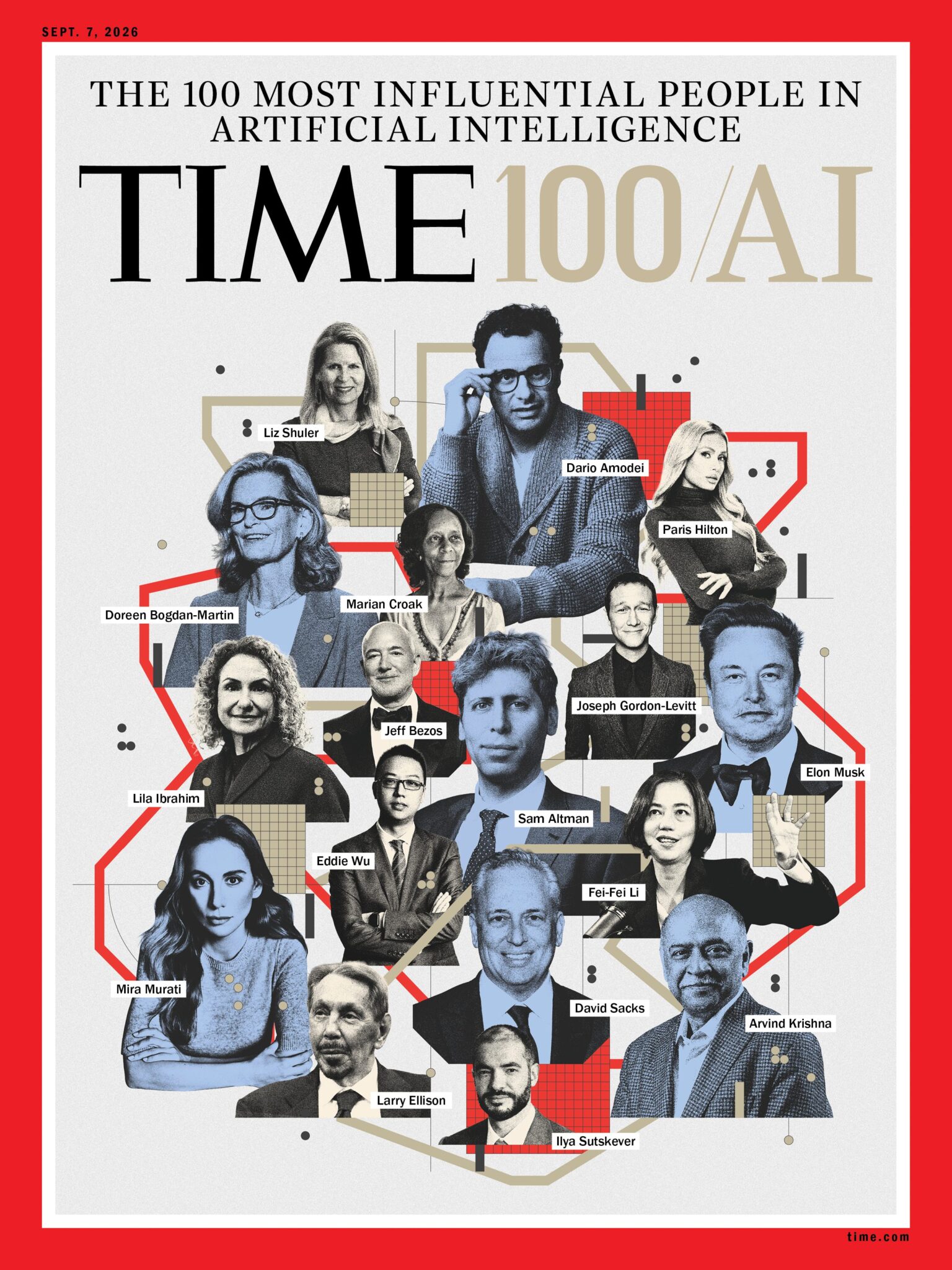
Do you know who wasn't on it? Jensen Huang. The co-founder and CEO of NVIDIA, the company whose chips make essentially every frontier AI model possible.
NVIDIA had just reported $96.2 billion in quarterly revenue, including $89 billion from data centers, up 117% year over year. This year, NVIDIA's sole representative on the list is its head of sustainability. AMD's Lisa Su got cut too.
I chuckled internally. If two Taiwanese-American chip CEOs who literally built the physical foundation of artificial intelligence can get bumped for Paris and Joseph, why on earth should I care about not being credited for a personal finance movement that has impacted millions of people for the better?
Jensen has a $150+ billion net worth, a wife, two kids, his health, and a role in business and society almost nobody will match this century. He probably chuckled too and got back to work.
Here's the thing. Zuckerberg, Nadella, Hassabis, and Karpathy got cut too, so it's not just Time's editor in chief, Sam Jacobs and British senior editor Ayesha Javed, cutting two Asian Americans. This is a story about what gatekeepers actually optimize for, which is narrative freshness, not contribution.
The 23-Year-Old Who Went From $50 Million To $2.5 Billion In Four Months
While Time was deciding who was influential, Noah Shinn was quietly making the point moot.
Shinn is a 23-year-old founder who registered Spear Street Technology in April 2026 after leaving Sierra. His product, Instinct, is a personal AI agent you text or call. No app to learn. It handles your calendar, your email replies, your travel, your subscriptions.
The funding timeline is wild. Early backers valued it at $50 million. Kleiner Perkins led a $75 million Series A at a $500 million valuation in early August 2026. Several weeks later, on August 26, Index Ventures and Benchmark co-led a $250 million Series B at a $2.5 billion valuation. Total raised: $350 million.
Four months from company registration to $2.5 billion. For a product still in invite-only private beta. That’s wild.
Do you think Noah Shinn is hoping for recognition from Time or any publication that curates a list of influencers? At 23, he built something people are using to plan weddings and cancel hundreds of dollars of subscriptions before it has even publicly launched.
The market recognized him in four months. No committee required.
Rejected By 16 Colleges, Hired By Google
Then there's Stanley Zhong, who I introduce in my upcoming book,Your Children Will Be OK.
Class of 2023 at Gunn High School in Palo Alto. A 4.42 weighted GPA. A 1590 on the SAT. Founded a free e-signing startup called RabbitSign as a sophomore. Scouted by Google in coding competitions at age 13.
He was rejected by 16 of the 18 colleges he applied to. Not just Stanford and MIT, which almost everybody gets rejected from. UC Davis. UC Santa Barbara. Cal Poly. University of Washington. University of Illinois.
He and his parents were distraught, as any family would be. What is the point of grinding for four years to get into the top 0.1% of academics only to end up with two acceptances? Why couldn’t he get recognized for his academic and entrepreneurial excellence?
Then Google hired him straight out of high school as a full-time software engineer, into a role his family's court filing says typically requires a PhD or equivalent practical experience. In 2025 he received an “outstanding impact” performance rating, higher than the majority of Google engineers, according to his father.
The Zhong family does care about recognition for the sake of their youngest and future Asian American kids. The Zhong family sued for racial discrimination, using AI to build the case after no law firm would take it.
Recently, Judge James Robart denied the University of Washington's motion to dismiss Stanley's Title VI claims (major media will not write about this). His father points out that Stanley has something almost no plaintiff in these cases has: he never enrolled anywhere, so he keeps his legal standing indefinitely.
A kid who was told he wasn't good enough for UC Davis, a school with a 45.8% acceptance rate, is now the one with leverage.
Choose Results Over Recognition
Life is unfair. You can complain about not being recognized, or you can accept that people tend to favor people like themselves and plan accordingly. If you're not part of the majority, the mountain is steeper. That's not a victim statement, it's a topographical one. You still have to climb. Recognize reality for what it is.
But notice the pattern across all three stories.
Jensen Huang doesn't need recognition, because NVIDIA prints $96 billion a quarter. Noah Shinn doesn't need a magazine, because Benchmark and Index wired him $100+ million. Stanley Zhong didn't need an admissions officer, because Google had already watched him win coding competitions at 13 and hired him.
Every single one of them was validated by a system that measures output instead of subjective vibes.
That's the whole lesson. Gatekeepers control lists, awards, admissions, promotions, and media mentions. They will almost always favor their own, and they will always chase whatever narrative is fresh. But they do not control results. Results compound whether or not anyone claps.
So build a body of work so undeniable that being left off a list becomes funny instead of annoying. You don’t need an invite if you’re producing great results.
The One Arena With No Gatekeepers
There's one place in American life where nobody screens your name, your face, your school, your race, or your surname.
The public markets.
You can buy the S&P 500 today with $10 and no interview. You can own a piece of the same companies that rejected you and let them work for you instead. Every quarter the company you couldn't get hired at grows, your shares grow with it. No committee, connections, or borrowed credibility.
And there's no 10.1% versus 100% math here. A share of VOO returns exactly the same to the guy with the 60% majority tailwind as it does to you. It's the only arena I've found where the playing field is genuinely, mathematically flat.
That is the great equalizer, and it's the reason I've spent 17 years telling people to build financial independence instead of waiting for permission. Money doesn't check your last name. It just compounds.
If you've ever been passed over for something you clearly earned, don't waste the frustration. Metabolize it. Rejection is the cheapest fuel available and it never runs out.
But burn it for the right reason. Use it to build something undeniable, not to prove a point to people who were never going to clap.
Because here's where Kusanagi was right. The world will not bend to your desires. So you can chase the recognition and stay disgruntled, or you can drop the wanting and get on with the work.
Readers, I want to hear from you
Have you ever been overlooked for something you know you deserved? Did you decide the system was rigged, or did you use it as fuel? Do you think being excluded from lists and awards actually costs you anything financially, or is it purely an ego tax?
In the meantime, pick up a copy of Millionaire Milestones: Simple Steps To Seven Figures, my USA Today bestseller. The book gives you the step-by-step framework for building real wealth, in the one arena where no gatekeeper gets to decide whether you're worthy.
Subscribe To Financial Samurai
If a friend forwarded you this post, join 60,000+ readers and subscribe to the free Financial Samurai newsletter here. To get notified of new posts, sign up here, where you'll get every article ad-free for the first few hours.
Financial Samurai began in 2009 and is one of the largest independently-owned personal finance sites today. Everything is written based on firsthand experience, because money is too important to be left up to pontification.

This is to address your question about whether your writing is appreciated: Financial Samurai NEVER gets deleted without being read first, no matter how overwhelming my Inbox gets. I’m 72 and retired, and some of the material is over my head, but I STILL wouldn’t miss it!
Great to hear Marian! Thanks for reading all these years.
Walk around the mountain and folks climbing the mountain you will win and be happy every time. Never fight gravity when flat land is available.
Really like your reference and discussion to Buddhism. I have been reading about Buddhism and practicing some meditation recently. One of the things that has evolved as a theme is not focus on outward pleasures and circumstances that we think we will make us happy. Wish I would have come across this concept before 50 as it would have probably saved me some heartache.
Sam, you are the only money guru who I read regularly—looking forward to this weekly post. You aren’t trying to cheat anyone, no trying to get ACA subsidies you don’t deserve or spend down your assets for Medicaid to pick up the bill, no stepping on the backs of others to get a leg up. Your children are blessed, your partner and parents don’t worry that you are lazy or unaware. I appreciate your self reflection. Thanks for all you do.
I felt snubbed for years for not making the Super Lawyers list. I kept grinding and getting results. When I finally stopped caring and decided to rely on intrinsic motivation, I finally made the list and have been on it the past 4 years.
Just another test. I suppose the root of this frustration is the idea that someone else is perfectly validated by reality at all times. That just doesn’t happen making unappreciated struggle the norm. We clap for a performer not for the 15 minutes but for the 15 years they were grinding in the dark.
Yeah, I was told my request for a raise was rejected because “It would put me at or above other engineers with more years of experience” they said to pay me more, they would have to look at bringing everyone else up in pay. I had proof that my client book was bringing in 150k in revenue per year, in addition to working on bigger projects from my manager’s book. I had to ask for a promotion from “Staff Engineer” to “Project Engineer” and didn’t get a pay bump with that either, it was overdue. So what did I do? I started my own engineering firm. Now it’s my name stamping the drawings. My insurance. I send the invoices and I have the Title and Pay that matches the Principal Engineers at my old company. All of the sudden other firms are trying to recruit me to lead their companies, because of my upgraded position.
Good for you in creating wealth via this ne company. However, Truth be told if the old company gave you the requested raise in pay, you likely would not have been more “motivated” for long. Numerous studies show money is a satisfier not a motivator.
Yeah I would have started my own company regardless. But the lack of recognition just made it easier to leave.
Engineers are one unhappy group.
Great article. There’s another area where the playing field is flat though: individual athletics! Anyone can train hard for a 5k, then go and enter a 5k race and place in his age group–no gatekeepers there! Same with calisthenics (no one is stopping you from doing a muscle up), weight lifting, etc.
Sam — You might have been one of the first to write about FIRE, but in my case the motivation came from somewhere else.
I FIRE’d at 46. What pushed me over the edge was watching the direction of government policy at the time (2008+) — higher taxes, rapidly rising health care and education costs, and an increasing disconnect between the people consuming services and the people paying for them.
At some point I looked at the economics of continuing to work and decided it simply didn’t make sense anymore. I had accumulated enough, valued my time more, and didn’t like the direction things were headed.
So while you were very early in recognizing and writing about FIRE, you weren’t the cause.
You were the reporter. The incentive to FIRE came from somewhere else.
P.S. And to your broader theme in this article, our whole country seems to be heading in a direction where the people who do the work don’t necessarily get the credit.
Maybe FIRE is just one way people respond to the new incentives.
If success gets punished, FIRE.
Being born on second or third base and scoring is definitely a growing thing as Wealth compounds to those who have the most authority and Wealth.
But I must say that it is incredibly satisfying to make it on my own without a majority advantage or being born in wealth. I feel so lucky. Can you imagine going to Stanford and being born into Wwealth and just ending up average? What a disaster.
I don’t think the person in your scenario is really thinking about it too much and we should not waste the mental energy comprehending it.
Advice I received some time ago: “Work In Silence”
I’m not sure if you play poker, but in the game we have a saying as to not be results oriented
Well said, and something I write in my upcoming book, Your Children Will
Be OK.
Also, a good reminder as I’m playing poker tonight!
Sam I’m a single white female that has been receiving your email for years. The only things I don’t relate to you on are your obsessions with funding your children’s educations so that they don’t need or want for anything. Part of it is just that I don’t have kids, but that’s the only thing I would consider “super Asian” of your personality.
Your TAM is way more than your ethnicity though, as evidenced by me. And you don’t have to hide who you are either – on the contrary, it’s part of what makes you unique!
I appreciate the commentary on gatekeepers though as I currently await results of my application for a T15 MBA school – less than 30% of the population is female and I originally felt like I “don’t fit in” either.
And if I don’t get in, thank you for reminding me that my portfolio won’t care! I will continue to make gains from all of the things other T15 MBAs have accomplished in those public companies.
Good luck on getting in! You deserve to be there just as much as any male.
“ The only things I don’t relate to you on are your obsessions with funding your children’s educations so that they don’t need or want for anything”
I think you misread. My “obsession” is with being a provider so there is a safety net just in case they can’t get into school and can’t land a job that pays a livable wage. If they can’t land, then the money stays compounding for our retirement. If they get crushed by a cruel world, then the money is there to help soften the blow.
I want a challenge after FIRE. So my challenge is to create the safety nets where the world doesn’t give them a fair chance because of who they are.
Sam if you haven’t read it yet I would highly recommend the Pulitzer prize winning memoir Stay True by Hua Hsu about his time at UC Berkeley during the 90s coming from the south bay as a son of Taiwanese immigrant parents. Go Bears!
You readers see you and your unbelievable work ethic by the way :)
Thank you! I will check it out for sure.
Go Bears!
Wow on the Time example. When someone who has played such a huge role in the AI story can still be left off a list like that really shows that recognition can be so subjective and dependent on whoever happens to be doing the choosing.
I also like your bigger perspective takeaway here to keep building and focus on the impact you’re creating and not let someone else’s decision about whether to recognize you diminish the value of the work itself.
It’s also a great reminder that recognition can be completely unpredictable but the work we put in and the results we create are within our control. So at the end of the day we should focus on the process and let the results speak for themselves.
Great article Sam. These insights impact everyone, in all areas of life. I think I’ll forward this to my adult children and save it to revisit myself from time to time. Well done.
Thanks, and please do! The ability to not desire recognition is so much harder when you are younger and less established. However, too much desire for validation and too much comparison will cause a lot of suffering, especially if we work extremely hard and put ourselves out there.
Thank you once again for a GREAT post and book recommendation! Keep at it Sam! We are all beyond proud and grateful for your hard work! FIRE is everywhere so know you helped contribute to that theory for sure.
Great article. Very inspiring and informative!
“Results compound whether or not anyone claps.”
GREAT article and exactly what I needed to hear today. Thank You!
You’re welcome! Fight on, and never surrender!
Thanks for the rec and good perspective on the DESIRE to begin recognized is a cause of suffering.
No surprise Time’s Editor in Chief, Sam Jacobs, and senior editor, Ayesha Javed, who is British, would leave Jensen Huang off the list. He is out of mind to them. But if the editors were Asian or actually knew about AI tech, omitting him would be the biggest oversight ever.
Everybody in Silicon Valley would name Jensen Huang first. So this is another example of the mass media becoming irrelevant and showing their biases.
Ayesha Javed is Muslim, maybe from India or Pakistan. So we can’t say that’s she’s biased, or can we?
this is such a confusing one, so all Asians are part of the same group no racism or bias between Koreans Chinese etc? And all whites with no reference to political agenda, religion etc. can you post pictures of google apple Nvidia leadership now?
Sure, there’s racism and tribalism everywhere. Sometimes it’s intentional, most of the time it’s not as people naturally just favor people like themselves. Accepting this relieves suffering.
Don’t look at it as racism, look at it as a math and numbers game. The more shots of success you have, the more you will likely succeed. The key is to recognize it and carry on. And if you do succeed, despite the lower odds, give yourself a pat on the back.
Here’s the NVIDIA leadership page: https://investor.nvidia.com/governance/management-team/default.aspx
Here’s Google’s: https://www.googlecloudpresscorner.com/leadership
Focus on the process and the outcomes. Focus on what you can control, and let go of the desire for recognition. It will only make you miserable.
When you say people favor or prefer people like themselves, are you only talking about people’s physical characteristics? This is where discussions like this lose me. I love reading your work. I also love Paula Pant´s podcast and work. Neither of you look like me and I couldn’t care less. I like what’s between your ears. Not your skin or your ethnicity. In preferring someone like myself in the context of being able to choose a neighbor, for example, I would choose someone that is, number one: quiet and number two: someone that takes care of their yard. I don’t care about anything else. In that context, I don’t want somebody that looks like me, but plays loud music all day and night and doesn’t do anything with their yard. Anyway, I’m always a bit disappointed with themes like this. I’m gay, married to an immigrant Mexican. Each time we are not selected for something, should we just assume it’s because of our characteristics? I won’t do that to myself.
At the end of the day, recognition doesn’t matter. Your own sense of well being and satisfaction is up to you. The ego is not your friend in the end.
That said, I still admire your work and your success.
That’s the irony isn’t it? Recognition doesn’t matter, yet so many of us, including myself, want to be recognized for our work. Especially if we try very hard for a very long time. And when we don’t, we feel frustrated, which leads to suffering.
How were you able to achieve the ability not to care about recognition? When I was in Asia, I talked to a couple of monks who meditated for months, sometimes for years to try to remove desire. But they were still trying.
Any tips on helping us achieve? Nirvana is appreciated! Thanks
Congrats for having never felt passed over or unrecognized for your efforts. What is it that you do and how are you able to achieve so much success?
So much of getting on with it seems like having a positive mindset.
I was passed over once and I have seen the old boys club at work to my exclusion. But I just kept my head down and finally I was able to retire early at 50 and do my own thing and hang out with my own people.
I don’t see 60% whites on those boards so is that an under-representation? Can you honestly say the people on the board now are more qualified than that Apple photo you shared of those that founded, persevered, and stayed at Apple when nobody wanted to work there? Also, Steve Jobs is half Persian. but I guess he doesn’t look it enough to count. The DEI woke 1.0 was a grab for power, no different than the fraternity bro culture that has dominated. Both are wrong and should be done away with.
Maybe they don’t qualify? Who knows. But my point is that the world is competitive and a lot of things are a numbers game.
If one group represents 1 million people, and another group represents 60,000 people, the chances are the 1 million group will fill up more spots. But if you can actually fill a spot as part of the 60,000, that’s a more impressive achievement.
With companies, profit, growth, and innovation are the motives. So long term, the best people will get hired. But short term mismatches will happen.
It’s OK if folks don’t recognize if they are born on first, second, or third base. That’s just the way of the world.
How about you? What race are you and what do you do?
Hi Sam,
Thanks for the book recommendation. Another book you might find helpful along this same line is called “The Courage to be Disliked” by Ichiro Kishimi. I am rereading it for the second time and honestly, I believe it may be an annual read for me.
Don’t be fooled by the title, it’s about creating horizontal relationships, instead of vertical, along with the need to seek praise or recognition.
Wishing you and your family a beautiful Fall season.
Yes, have read that book too. Both provide a great state of mind for everyone as we navigate through life.
Thanks!