
The popular image of a FIRE practitioner is someone eating rice and beans, clipping coupons, and driving a car older than their kids. All luxuries are shunned in order to grow their wealth as large as possible. FIRE folks are cheap and should enjoy life more critics say.
There's some truth to it. To retire early, you usually need to save aggressively for 10 to 20 years. Along the way, you develop frugal habits that help you appreciate more of what you have. You may even start treating investing as an entertaining expense that motivates you to save even more.
After 10+ years of aggressive frugality and a 50%+ saving rate, it's very hard to change your ways once you break free from the corporate grind. I used to work late until 7pm all the time so I could eat free cafeteria food. Then I'd take some fruits and snacks out so I could save for breakfast the next day. So cheap.
However, one day, you might discover your financial habits are much different from the narrative you've been telling yourself for years. Instead of thinking you're cheap after FIRE, you're actually spending aggressively.
I certainly did. And it made me realize the cheap FIRE stereotype is mostly wrong.
Just Buy The Car Already
One of the benefits of writing publicly is getting regular reader feedback. Most of it is cordial. Some of it is not. That comes with the territory.
After I wrote about the hidden cost of buying a new car, a reader left a drive-by comment: “Just buy the car already. You've been talking about this too much.”
That's not happening. In the post, I shared that I scraped the front right side because I didn't see a bike rack sticking out three feet. My first reaction wasn't anger. It was relief. There's a wonderful feeling in not caring when an 11-year-old car gets another battle scar.
Still, his comment got me thinking. Am I being overly cheap, or even a little masochistic, by driving an old car with problems when I don't have to?
My conclusion is no. The joy of not caring whether my car gets scratched or dinged outweighs the joy of driving something new in a bustling city. New expensive stuff just gives me more stress.
Then I looked at my spending on things that aren't necessary for survival. The total is far beyond what a stereotypical cheap FIRE practitioner would spend. And I have a feeling when you do a spending audit, you'll discover similar things.
The Opportunity Cost Of Early Retirement Is Enormous
Here is the key point applicable to ALL people who FIRE.
FIRE practitioners leave enormous sums of money on the table to do something else. From a financial point of view, they are paying a huge opportunity cost to sit on a park bench at 11 a.m. on a Wednesday and read.
So by default, FIRE practitioners are not cheap once they actually retire. And the more they made at their day jobs, the less cheap they are, because the opportunity cost is bigger.
In 2012, I was paid a $250,000 base salary plus a discretionary bonus that ranged from $0 to $500,000. By walking away, I essentially spent all of it that year to be free from corporate politics, business travel, client pressure, and meetings.
Then I spent it again the next year. And the year after that. Over 14 years, that’s over $3.5 million in forgone base salary alone, before any raises. Add bonuses, and we’re talking about over $7 million in forgone compensation.
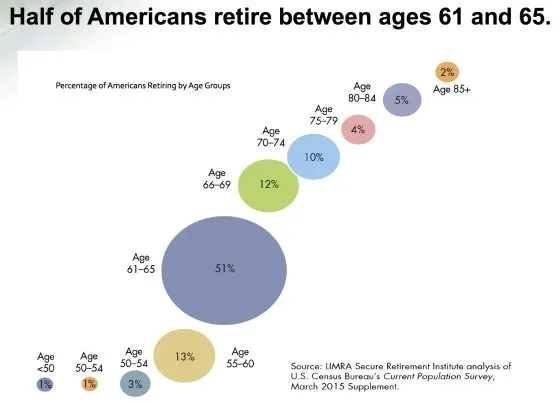
Most people are willing to sell their soul for money until age 61. Even if their company is harming society, it can be extremely difficult to walk away from a fat payday.
Paying Full Price For Healthcare
And it’s not just the lost paycheck. When you leave, you also lose your employer’s subsidized health insurance.
We pay about $3,000 a month for unsubsidized healthcare for our family of four. That’s $36,000 a year for coverage I used to get for a fraction of the price.
Choosing not to continue working is one of the most expensive purchases you can make.
FIRE Practitioners Are Society's Biggest Spenders
So contrary to popular belief, anyone who actually takes the leap and FIREs is a big spender, not a cheap or frugal one.
Conversely, anyone who says they are FIRE and keeps working at a job they dislike for one more year is not. They are likely just fooling themselves. Because at the end of the day, your financial independence number is not real if you do nothing to change your life.
I hope this fundamental point is clear. Meanwhile, anything a FIRE practitioner spends beyond the basics necessary to survive should also be taken into consideration.
Let me share some examples, which are different for every FIRE person. However, here are likely the two biggest discretionary life expenses to consider.
A House Or Apartment You Don't Need
If you rent or buy a house that's larger than a studio for yourself and a partner, or a two-bedroom if you have a couple of kids, you're spending beyond what's necessary.
Our biggest discretionary expense is the house we bought in 2023. It cost about 75% more than the house we bought in 2020 at the start of the pandemic.
We didn't need another bedroom or two more bathrooms. We also didn't need an enclosed front yard for our children to play outside safely. Nor did we need a larger lot with a view of the Golden Gate Bridge.
But I wanted it, and I convinced my wife it was a good idea. She was happy in our old house.
We could easily save $40,000 a year in property taxes and maintenance if we had kept our old house. But the best time to own the nicest house you can afford is when you have the most heartbeats at home. Once the kids are gone, we can always downsize.
Anti-cheap FIRE spending: $50,000 a year more on housing
The Kids You Love
Some in the FIRE and personal finance community swear off kids because they are expensive and require a tremendous amount of time, money, and effort to. Kids can crimp the FIRE lifestyle. You can no longer travel as freely or do whatever you want every day.
Instead of going to food, things, and experiences for yourself, a lot of your passive investment income gets sopped up by little humans who often don't know how good they've got it.
Raising a child in an expensive coastal city can easily cost $1 million from birth through age 18. Add another $400,000 for college in today's dollars, and raising a kid can cost roughly $1.4 million through college graduation.
Of course, families can spend far less. Call it “only” $300,000 through age 18, or $500,000 through college. But that's still a lot of money going to someone other than you.
Nobody needs kids. But many of us want kids. Once we had one, we thought kids were so special that we had another. If I could rewind time to age 30, I would slap myself silly and shoot for one or two more. That said, being an older parent has its benefits, such as more maturity and financial means.
Anti-cheap FIRE spending on kids living expenses such as food, clothing, lessons, travel: $16,000 / year
More Unnecessary Expenses That Aren't Cheap
Living in a nicer home and having kids aren’t outrageous excesses. Some would argue they’re foundational desires. We spend more time at home than anywhere else, and procreating is kind of necessary for the survival of our species.
But FIRE folks also spend plenty on things that are absolutely unnecessary. Like all things, there are levels to this.
Here are two more of mine, which may seem downright wasteful to some. But despite my temporary liquidity crunch, I’m not cutting back yet, especially after realizing how hard it is to spend money when you’re old.
Independent Grade School Tuition
One of my biggest academic regrets is not taking Mandarin more seriously growing up. I lived in Taipei for four years while my parents were stationed at the American Institute in Taiwan, and I still blew it. Then I wasted seven years of Spanish from middle school through high school.
I’d pay a fortune to be fluent in a second language. So instead, I’m paying a fortune for my kids to have the chance I squandered.
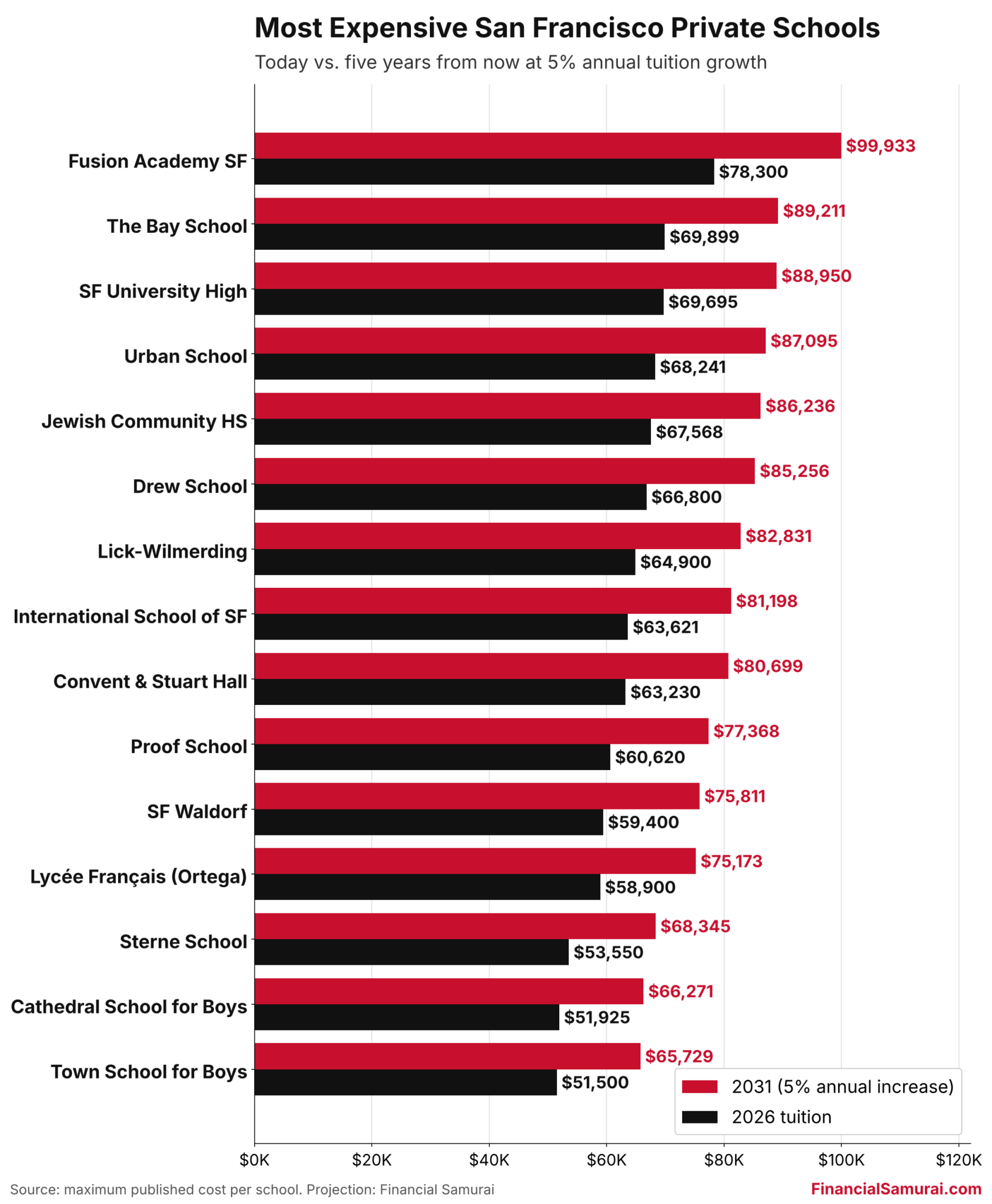
We send both children to a language immersion school, which costs about $46,000 a year per child. It’s a lot of money. I’m a product of public high school, college, and business school, and I’m still a believer in public schools. I often wonder whether we’re making the right call.
A frugal FIRE parent would send their kids to public school and hand them a free language app. A really frugal one might even homeschool, which we did for 18 months during the pandemic. I can confirm it is not free. It just costs you your patience instead of your money.
Maybe this tuition is just expensive therapy for not studying harder as a kid.
Anti-cheap FIRE spending on education: ~$92,000 a year
Ordering Food Delivery That Buys Back Time
Living in San Francisco, we’re spoiled with great food. And since many of the delivery companies started here, getting it brought to your door is a breeze.
I love to eat. You should see my gut, which is why I joined a Dad Bod Challenge. I also love saving time and not slicing my fingers while cutting onions.
So we’ve ordered delivery a couple of times a week for over 10 years. We could save money grocery shopping and cooking more. But we’d rather spend that time elsewhere. Clearly not at the gym.
Anti-cheap FIRE spending on food: ~$1,000 a month
Adding Up The Not-So-Frugal FIRE Tally
Here's roughly what our unnecessary spending looks like each year.
| Discretionary Expense | Estimated Annual Cost |
|---|---|
| Nicer house (extra property tax and maintenance) | $50,000 |
| Independent school for two kids | $92,000 |
| Kids activities, travel, clothes, glasses, healthcare | $16,000 |
| Food delivery and restaurants | $12,000 |
| Total | $170,000 |
Add the $250,000+ in forgone base salary, and we’re spending over $420,000 a year on a lifestyle that strangers might call cheap. All because I drive an old car.
Here’s the kicker. Even with all this unnecessary spending, our excesses still cost less than the base salary I walked away from. And that assumes my base salary never went up after 2012, which is unlikely.
Oh, and I haven’t even included my wife’s forgone salary.
Therefore, the mere act of retiring early and giving up a paycheck isn’t cheap. It’s prodigal.
The Cheap FIRE Narrative Needs Retiring
Sure, I drive an old car and fly economy. But that’s because I feel stupid buying new or paying up for first class.
The farthest I usually fly is five hours to Hawaii. Paying $1,000+ more for a premium seat feels ridiculous when I fit just fine in economy. That’s $200+ an hour for five more inches of legroom and a seat up to six inches wider. All so I can write a post, eat a meal, watch a movie, and take a nap. Things I can already do in coach.
Spending nothing on things you don’t care about isn’t cheap. It’s knowing what you value.
So I’m declaring the cheap FIRE narrative dead. FIRE practitioners, especially the Fat FIRE crowd, are some of the biggest spenders in society. We could keep grinding to make more money. But we don’t, because we value our time more.
Giving up all that income every year to travel, create, or spend more time with our children is expensive. But we wouldn’t have it any other way.
Reader Questions
- If you added up your forgone salary plus your discretionary spending, how much does your version of financial independence really cost each year?
- Which “unnecessary” expense would you never give up, even if it delayed your early retirement by five years?
- Do you think FIRE practitioners are frugal, or are they simply spending their money on time instead of things? Perhaps the stereotype refers to people who are Coast FIRE, Barista FIRE, or Lean FIRE instead.
If your goal is to build enough wealth to buy your freedom, check out my USA Today bestseller Millionaire Milestones: Simple Steps To Seven Figures. It'll be the easiest and best personal finance book you'll ever read.
Subscribe to The FS Free Weekly Newsletter
If someone forwarded you this post, join 60,000+ readers and sign up for the free Financial Samurai newsletter here. You can also get my posts in your inbox as soon as they're published, ad-free for the first few hours, here. I've been writing about FIRE since 2009.
