
After my posts on being broke again at 49 and feeling silently stressed, some of you let me have it. Irresponsible. Reckless. Top of the market psychology.
All fair points. Please keep the respectful criticism coming.
I appreciate the pushback because it forced me to look hard at my risk profile and explain it out loud. So here’s my defense. Part of it is financial. The other part is psychological, and that’s the part almost nobody talks about.
I have a liquidity problem. I don’t have a solvency problem. One makes me annoying at Red Rocks. The other gets your house foreclosed on.
My hope is that this post also gets you to review your own risk profile too. Leave a portfolio alone for a few years, and your actual asset allocation can drift far from what you really want. Rising markets, new commitments, and life changes all quietly rewrite your risk tolerance for you.
My Venture Investing Philosophy Post FIRE
I left the permanent labor force in 2012. Since then, AI has accelerated the decline of my ability to earn supplemental retirement income. So the only realistic way to outpace inflation is to invest aggressively until my free cash flow runs dry.
And if AI is the biggest threat to my income, and potentially my children’s future income, it only makes sense to own the very companies capable of ruining our lives. If you can’t beat them, become an LP.
I’ve been investing since 1996 and have survived multiple bear markets. During the global financial crisis, I lost about 35% to 40% of my net worth in roughly six months. Money that took 10 years of aggressive saving and investing to build, gone. That experience taught me a risk-appropriate asset allocation isn’t optional. It’s survival.
So I cap private investments at 20% of my investable capital. That includes venture capital, venture debt, and angel investing. These investments are opaque, illiquid, and charge higher fees. I’m OK with that. I’m happy to pay up for access to potentially higher returns, and I enjoy outsourcing the work so I don’t have to think about it.
I also cap my private and public equity exposure to 50% of my net worth. At my age, I prefer less volatility, not more.
My goal is to outperform the average index investor. You don’t do that by owning only what the average index investor owns. At the same time, my other goal is to stay unemployed until my youngest leaves home in 12 years.
If 100% of my 20% goes to zero, I’ll be battered but still survive. Yes, private and public markets are correlated, so a bad year for one is probably a bad year for both. But ring-fencing a fifth of my capital protects the other 80% from my worst instincts. More on that below.
Five Capital Calls In Five Weeks
To show you how ferocious the capital calls have been, here’s a five-week snapshot of every wire I sent to my venture funds.
This may also be an ominous indicator of bubble behavior in the private markets as too much liquidity chases too few promising deals. Venture funds must get bigger to successfully compete.

Five capital calls in five weeks totaling $111,150. That’s way more than my passive income and online income combined. Hence the financial constraint.
Even a Managing Director at an investment bank making $1.5 million a year would wince. An MD’s base salary is about $500,000. Most of the pay comes as a year-end bonus withheld at close to 50% in a high-tax state. Then up to half of that bonus may be paid in deferred cash and stock that vests over three or four years. On paper, $1.5 million. In the checking account, a lot less.
And this was just one flurry. I’ve had four more like it this year, and the year isn’t over. Carrying silent stress is inevitable.
Why Aggressive Venture Investing Has Its Benefits
Before making any investment, I spend hours modeling the risk-reward potential and stress-testing my liquidity. Then I assign every investment a specific purpose. If I can’t explain why a dollar is going somewhere, it doesn’t go.
Finally, I talk each investment through with my wife and my father, and sometimes with the Financial Samurai community. Three sets of eyes catch what one set of overconfident eyes misses.
Here’s why I’m comfortable investing in venture so aggressively post FIRE.
1) It Protects Me From Myself
I’m a terrible trader. Before 2011, I’d rack up 1,000 trades a year and walk away up or down $20,000. All that time and stress for a coin flip. My old big boss eventually flew in from New York to tell me to stop. So I did. Please don't day trade.
Since then, I’ve mostly been a buy-and-hold investor in index funds and individual stocks like Google and Apple. Mostly. I’ve still made some dumb trades that lost me plenty of money.
Money committed to venture can’t be traded. It’s in the hands of general partners who are incentivized to find the best private companies to make their LPs, and themselves, money.
So I don’t view that 20% as being at greater risk. Ironically, I view it as being in safer hands. With GPs incentivized to make money and raise new funds, I see them as better fiduciaries than me, who opted out of the grind. Further, when selling is one tap away on your phone, the biggest risk to your portfolio in a bear market is usually you.
2) It Forces Me To Invest Through Downturns
In 2009, I wrote that I should buy rental properties in Vallejo, California, which was getting obliterated by the financial crisis. I didn’t buy a single one. Too scared, and too much of a PITA. Opportunity lost.
In 2012, I even tried to sell my primary residence because I feared a housing relapse and I had just left my day job. Luckily, nobody bid on it. I sold it in 2017 for a lot more.
Venture helps with consistently investing, even during bad times. Funds typically call about 90% of committed capital over three to five years, whether I feel brave or not. When the next downturn hits, I’ll be investing at lower valuations even if every fiber of my body wants to hoard cash.
Every major S&P 500 decline has eventually been followed by new all-time highs. Knowing that was never the hard part. Acting on it while everyone panics is. Capital calls act on it for me.

3) Top Tier Venture Firms Can Generate Superior Returns
Most venture capital firms have not beaten the NASDAQ over the past 10 years. However, the very top tier have and can continue to do so. Therefore, if you can get invited to one, jump at the chance.
I finally was able to invest in a tier one fund’s 2026 vintage after investing in their 2018 and 2022 vintages. Demand was oversubscribed, and I wasn’t going to miss out on the opportunity to max out my allocation with them.
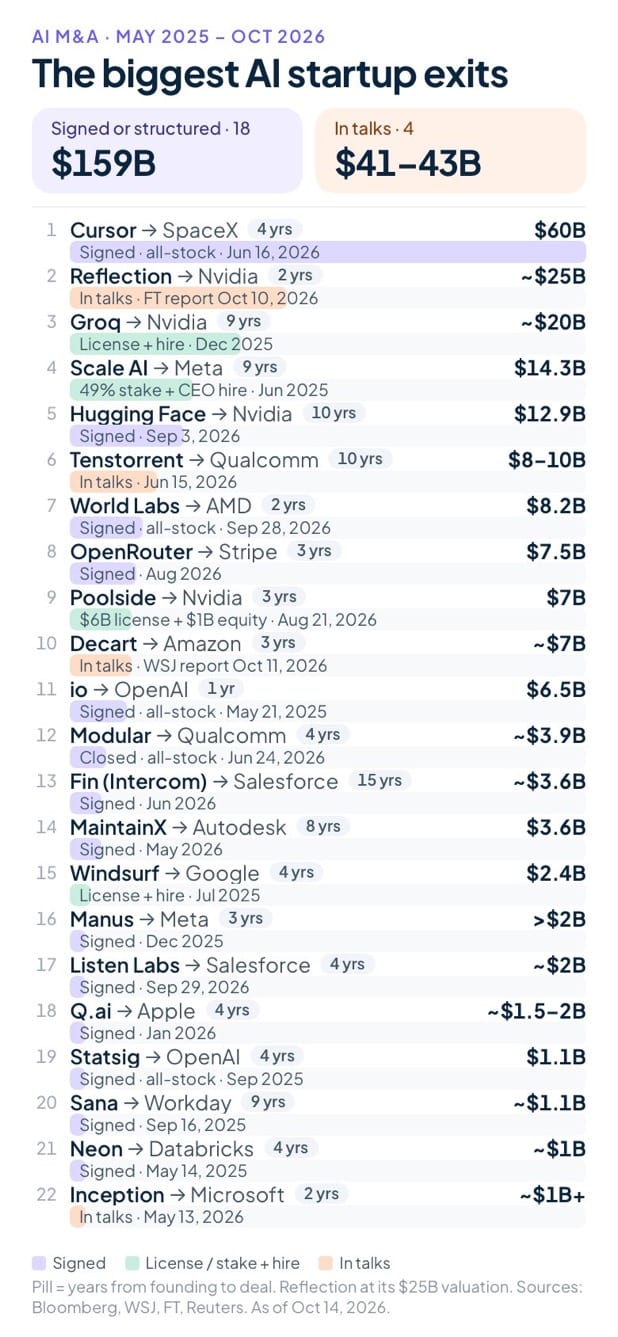
So far, they are doing well with investments in names like Instinct and Etched. However, these venture returns are not real until they exit. All the same, the markups feel good anyway as they keep FOMO at bay.

The Psychology Nobody Talks About: Sacrifice Feels Good
Now for the part that gets lost in the investment allocation debate.
I’m a thrill-seeker. At 18, I got in trouble with the law, largely from taking stupid teenage risks. Afterward, I figured the worst outcomes in life were going to jail, getting beat up, or getting shot. I’d been in plenty of fights, so I could handle the first two. I drew the line at getting shot, because I didn’t want my parents to be sad.
When your baseline for a good life is that low, everything else is a win. Landing any job is a win. Having a girlfriend is a win. Being able to see and hear is a win. Any money beyond basic living expenses is a huge win. I’m perpetually grateful to be here after a rough start.
That mindset makes taking risk easier because if I lose, I’m still in a better place than I was. I’ll admit it can also make taking irresponsible risk easier. That’s exactly why the 20% cap exists.
But here’s what really drives me.
There’s little hope for an unemployed old man like me to make big money again. I had my run: McDonald’s at 15, temp jobs, 13 years in banking, then 17 years writing on Financial Samurai. All good things must come to an end, and I’m at peace with that.
What I’m not at peace with is my children losing their shot before they even get to take it.
It bothers me when some AI executives gleefully talk about wiping out millions of jobs. They may be right. But you’d think people building world-changing technology would know how to read the room. Millions of parents are listening, and we are not amused. These executives should be afraid of the masses, who won’t give up without a fight.
So every time a capital call hits, I feel worse about my liquidity but better about my children’s future. That’s a trade I’ll take every time. As a father, I’d give any part of myself to help my kids be OK. I'm sure every parent would too.
The discomfort of feeling broke today is outweighed by the hope that the capital comes back in 10 to 12 years, with a return, right when they’re entering adulthood.
This is the psychological component people miss. Sacrifice feels good when it’s for the people you love. Every wire feels like a small act of protection. It’s the financial version of a parent eating last.
Money is also only half the plan. After school and on weekends, my wife and I are their homeschool teacher, working on skills that may matter in an AI world. A financial safety net is nice. Being able to build your own is better.
Life Is Too Easy And Too Dangerous To Leave Up To Your Own Devices
Is a 20% cap enough? I’m not sure. Over the long run, the S&P 500 and Nasdaq have been fantastic, often beating alternative investments. But the temptation to tinker grows the more money you have.
With $100,000 invested and stocks down 20%, you’re probably still working and happy to buy the dip.
With a $10 million portfolio and no job, a 20% decline means $2 million gone in months. That could be a decade of savings. That’s when people do dumb things during downturns.
This is why I also own real estate. I can’t sell a house on my phone easily, so I don’t. That illiquidity is a feature, and it’s the reason I’ve held some properties for so long. When values dip, I don’t see a daily quote. And if a neighbor’s sale tells me my home is worth a lot less, at least I’ve been enjoying living in it.
Living In America Is Fantastic
Having lived abroad growing up for 13 years, I know how good we’ve got it in America. Our freedom, our rule of law, and our entrepreneurial spirit give people real hope that hard work leads to reward. America isn’t perfect, but it’s still the best country in the world for freedom and capitalism. Why not invest in it?
The flip side is that comfort makes it easy to coast. We overeat and our abs disappear. We binge TV and video games. Then we wake up 10 years later wondering why we don’t have more money and freedom.
Venture capital goes to the heart of the American spirit: entrepreneurship. I want to back the most driven people taking the biggest risks to change the status quo. At the same time, I want to own plenty of the S&P 500, the all-star team of corporate America.
Living capital call to capital call is uncomfortable, and I won’t make the same mistake with my next commitment. But I’ll keep investing aggressively, because I have one clear goal: build as big a financial safety net as possible by the time my kids become adults.
Call it reckless if you want. I call it being a dad who thinks in two timelines.
Reader Questions
Is 20% of investable capital in private investments too aggressive for a retiree with young children? What’s your limit? Have you ever invested in something partly because it made you feel like a better provider? And do capital calls make you a more disciplined investor, or just a more stressed one?
Get A Free Second Opinion On Your Risk Profile
Leave a portfolio alone for a few years, and it drifts. A rising stock market can quietly turn a 60/40 investor into an 80/20 investor without them lifting a finger.
If you have over $100,000 in investable assets, you can get a free financial consultation with an Empower financial professional here. Link your accounts, and they’ll review whether your actual allocation still matches the risk you want to take.
It’s a lot cheaper to find out now than during the next bear market.
Financial Samurai is a long-time affiliate of Empower and is currently not a client.
Read More Books
If you want a step-by-step plan for building wealth without losing your mind during capital calls, bear markets, or anything in between, pick up a copy of Millionaire Milestones: Simple Steps To Seven Figures. I distilled 30+ years of investing and 17+ years of writing into a roadmap that helps you reach your first million and beyond, at any income level.
It’s a USA Today bestseller published by Portfolio Penguin. You can grab a copy on Amazon or wherever you buy books. Building wealth is a marathon, and the right framework keeps you from tripping over your own feet.
Stay In Touch
Join 60,000+ readers and sign up for my free weekly newsletter here. I write about investing, real estate, venture capital, and raising a family in an AI-driven world, all from firsthand experience.
To get new posts in your inbox as soon as they’re published, ad-free for the first few hours, sign up here.
Money is too important to be left up to pontification. I’ve been writing from firsthand experience since 2009, and I’ll keep sharing what I’m seeing and doing with my own money.

Thank you for this post. This is a world I know nothing about.
It sounds super stressfull and a “San Francisco thing”. It feels like trying to scratch an itch and get access to a super exclusive club more than an objective need to earn dollars.
From my vantage point, you’ve won the game already.
Question : you write “The discomfort of feeling broke today is outweighed by the hope that the capital comes back in 10 to 12 years, with a return, right when they’re entering adulthood.”
Why do you need massive amounts of money for when your kids are entering adulthood? Is it to fund an expensive education? Of as a cushion for them if IA ate all the jobs?
Best,
N.
You’re welcome. Yes, definitely more of San Francisco Francisco thing since we are the startup capital of the world.
I guess I’ll turn the question around to you. Are you not worried about AI eliminating millions of entry-level jobs? If not, why do you think not having a financial safety nut just in case there is a terrible scenario where those who are already Rich and Powerful get richer and more powerful and those who aren’t get left behind?
I feel that work and saving and investing is far more meaningful if there is a purpose to it. So I find a great amount of meaning saving and investing for my children’s future just in case it isn’t bright.
How many children do you have?
Thank you for your reply. I don’t worry about my child’s future that much. I’m still in the “AI will help us work faster and more efficiently” camp. Maybe that’s naive. You have a front-row seat to this…
On a more philosophical level, I don’t want to give my child access to a lot of money in adulhood. That’s just not my role as a parent.
Index investing is great because you get to live your life and let your investments live theirs. But with what you’re talking about, the simplicity is lost.
It’s like someone who’s struggling to make a big car payment and doesn’t have the money at the moment. For a multimillionaire, it doesn’t feel like a step up; it feels like a step down plus extra stress.
The liquidity vs. solvency distinction is the clearest part of your framework — money locked in a fund you can’t panic-sell is a very different risk than leverage you can’t service. From our vantage point as a South Florida real estate investment firm, we see the same principle in physical assets: illiquidity is only a feature when disciplined underwriting supports the long-term value. Your point about committed capital forcing you to invest through downturns mirrors exactly why we hold income-producing property through cycles rather than trade around them.
Sam, thanks for the transparent defense. The distinction between liquidity problem vs solvency problem is important, and the psychological angle about sacrificing for your kids really resonates.
That said, five capital calls totaling $111k in five weeks while living off passive income does feel aggressive for someone with young children and no W2. Curious — have you considered reducing new commitments going forward so the existing 20% can season without constant cash pressure?
I’m 61, my wife is 51 and our children are 7 & 10. I currently have 22.5% in private equity including 14.5% in venture. The other private equity is all through listed funds. I only have about 5% exposure to the US Mag-7 stocks. I feel the latter are more risky, but my perception could be completely wrong… Nowadays, my trades mostly make money or lose only a little. I don’t do many of them. Overall, I target 60% stock exposure split three ways between public long, (mostly listed) hedge funds, and private equity.
The liquidity versus solvency distinction is the clearest way I have seen this explained. It also helps to ask what would force a sale at the wrong time, since an uninsured medical or liability event can turn a liquidity problem into a solvency one overnight.
Yes. You may enjoy this post: Rich millionaire versus poor millionaire
I’m not sure exactly where we stand on current valuations, but as a household, we have over 20% in VC because of one of our jobs. I am starting to advocate for smaller commitments going forward because we aren’t getting any younger, and I want to enjoy life now. We’ve both had long, hard careers, and I don’t want to buy any more green bananas. The commitments and our unnecessarily large mortgage are the only things standing between me and retirement.
But green bananas eventually turn ripe and yellow! :)
At the risk of sounding preachy, you have helped me so much, I want to offer some advice in return Sam.
Don’t let this AI boom/hype give you such intense FOMO that you feel the need to participate at all costs.
Those of us in tech for decades want to be you! At some point after the AI chip companies as well obvious names like Anthropic, OpenAI, Cursor/SpaceX, etc all overshoot then fall back down to reality, AI will touch EVERYTHING. Even companies like MCD, HD or LLY will see it’s benefits. In my opinion, you do not need to be close to AI to benefit from it over time. You just have to keep owning & building quality businesses and assets. Just like any other startup revolution, 98% of the companies getting heavy funding now thinking they will change the World will fail. But the people who sell us on them are aggressive and charismatic.
You already escaped this rate race, this bubble will be like all the rest we have seen before. Now when AI starts to go into robotics, that will be interesting…
Thanks for sharing your thoughts AJ. Isn’t it funny how the grass is always greener?
The problem with living in San Francisco is that you are surrounded by tech and Kang Ho people 24 seven. Therefore, it is hard not to experience FOMO, which is part of the reason why I want to go back to Honolulu and live the more quiet and peaceful life.
But there is also a sadness about closing the San Francisco chapter, which I’ve read for the past 25 years.
There’s also an excitement to being able to invest in some of the hottest companies without having to work for them and grind 50 to 70 hours a week.
My plan is to try to invest an equal amount in a top-tier 2028 vintage venture fund the year I plan to relocate to Honolulu. Let’s see what happens.
How are you doing on your Financial independence journey? With so many years in tech, surely you’ve done quite welfare yourself.
It has taken me awhile to realize SF is a “boom or bust” town, starting with the original gold rush. I’ve seen it boom with the inception of the internet, then cloud/Saas & now AI. The hype when I am there right now is palpable. Just try not to forget you’ve already won!
My recommendation, that you taught me over the years by the way, is to invest heavily in the “picks & shovels” associated with the entire AI food chain. Just think of how it flows from semiconductors/manufacturing equipment (ASML, ONTO, AMAT) through chip design, fabrication & memory (NVDA, AMD, TSM, MRVL, AVGO, MU) to networking (ANET, CSCO, AVGO, COHR) to electrical energy needs (this will become a big one I think – GEV, CEG, PWR) to DC power/cooling (also underrated – VRT, ETN, EMR, PH) to cloud platform hosting (GOOG, MSFT, AMZN, ORCL) to AI models & platforms (GOOG, META, MSFT, AMZN, OpenAI, Anthropic) to enterprise AI/software & agents (CRM, PANW, DDOG, SNOW, NOW, MDB) to most all businesses as they adopt AI (WMT, HD, LLY, MCD, KO, SCHW, BLK).
I am getting closer to true FIRE, already past lean FIRE but have a few more years to get closer to fat FIRE, if possible. We never know how many years we’ll get though. At this point I don’t have a net worth issue as much as a liquidity issue to 59.5 and 401K access without penalty. Our goal is to end up with a place in FL and one near Tahoe (NV side), travel the world & Americas at will, be there for our grown kids & enjoy life with friends & loved ones. Thank you again for all of your advice over the years, please keep showing us the way Sam!
Good stuff AJ. Tahoe is great… but you might get bored after a month or two there after years in tech in the Bay Area! I have a place in Palisades, and I THOUGHT I wanted to live there for 3-4 months a year, Hawaii for 3-6 months a year, and SF in the rest. Didn’t happen as I longed for the excitement too much.
I’ve just been long all the big tech names for a while now, and will probably just hold them for the next decade.
My favorite picks and shovel is SF real estate, as an owner for 23 years now. https://www.financialsamurai.com/real-estate-is-the-easiest-and-safest-way-to-profit-from-ai/
And sorry about the comment system. They all go through, it’s just turned to mega filtering due to swarms of spambots.
I think you are right about Tahoe and kinda feel that way already, especially South Lake. Not married to that location, anywhere in the American West with mountain views will do. FL because imho it’s still inexpensive (for now), gorgeous from October-March & I am a FL native with family still there.
I totally get your passion for the SF Bay and love how well you’ve done on RE there. Still kicking ourselves renting there from 2008-2016 before moving to TX. Pretty much any purchase during that time would have served us well. Oh well, can’t win them all.
I’m aggressively investing in venture Capital as well given private companies are staying private for longer and AI is truly growing at an unprecedented rate. If you miss out on this as enabled bodied, normal minded person adult, you’re gonna kick yourself forever in the future. And this is especially true if you have children.
Anthropic FCF positive in Q3 and reaccelerating in October on Opus 5.5 per third party data. Roadshow in several weeks will happen after this has been widely confirmed. Unit economics much better than expected given positive FCF with 75% of their compute going to training. All per public reporting.
I’m always happy to see free cash flow positive figures in fast growing companies. You can’t die if you’re free cash flow positive. And half the battle is living another day.
It just seems like you are making things harder on yourself than they need to be.. Say you have a 10M liquid portfolio. You want to allocate 20% to private capital. So you get invited to funds that will require 2M in capital calls over next 3 years. Put 2.5M of the 10M in more conservative vehicles that still make 4-5% but highly liquid?
Is it that all the “example” 10M in stocks that if you sell (to generate the 2.5M) they would generate major tax on CG? YOu have no losers you could you find some losers to off-set. But didn’t you already say you have treasuries so I think that could be a good portion of the 2.5M?
You have had this long-term strategy of wanting to invest in private funds for several years, and if only 20% of assets, then seems like you could create a allocation that might cost you 1-2%% a year in overall returns but makes like a WHOLE lot easier, less stressful, and frankly smarter cause it would insulate from major market selloff.
I just wonder if you are chasing “return optimization” at the expense of “the good life” and peace of mind. Thats my psychological observation :)
Maybe, but I think that’s the wrong way of thinking about things. If you put 2.5 million, or 25% of your investable asset towards risk into low risk then it messes up overall asset allocation.
And if you think we’re in a bull market for the next several years, carving out at $2.5 million earning four or 5% could miss out on 10 to 20% per year growth for 3 to 5 years. And that adds up to a lot of money. Fear and greed at play.
But I hear what you’re saying and it’s one of the reasons why I publish this post. Thinking about your asset allocation is huge given so many stocks, both public and private have moved so much over the past three years alone.
I like the 10 year bond yield at 5.25%. That seems attractive after a huge run up and risk assets over the past 3 to 6 years.
I agree with adding the psychology aspect to your strategy. At the fundamental level, you are selling an appreciating asset and buying another with the capital calls. You definitely should not “feel” poorer but that’s human nature. If you enjoy amping up the risk and you love the opportunities, you shouldn’t penalize yourself by cutting expenses. Now, the additional expense associated with the capital gain is an additional expense in the short term but you’ve already shown us multiple ways to mitigate. Good Luck with the bold new investments!!
Thanks. Yes, I think I would have regretted saying no to a family vacation to Las Vegas last week due to the liquidity crunch.
The best practice for finally decumulating may actually be when you have the least amount of cash at the moment. Then, spending in the future will become easier when you do.
I just wish I had more cash flow to invest, instead of trading one asset for another.
Ask a room of 20 people if xyz is a good investment strategy and you’ll get 20 different answers. Sounds to me that you’ve found a mix for your portfolio that works well for your needs and that’s what matters most at the end of the day. I like how you invest with purpose, because what’s the point of investing without it ya know. I also think investing into AI is a wise strategy given how much is changing exponentially.
Congrats on your VC investment!
On a tangential note, do you have an “Enough” number, or do you plan to keep investing aggressively no matter your net worth?
Given my age, I probably only have around 5 more years of aggressive venture investing until I stop.
I’d be 54 in 5 years, so + 12 years is 66.
Will probably scale down amounts after that.
How about you?
Related: https://www.financialsamurai.com/the-problem-with-investing-in-venture-capital-when-older/
I view my VC investments as nurturing the seeds of a brighter future, so I expect they’ll always be part of my portfolio. As Trueblood wrote, “A man has made at least a start on discovering the meaning of human life when he plants shade trees under which he knows full well he will never sit.”
You write about sacrificing for your children. How do you plan to pass your wealth on?
a Lump Sum (with or wo conditions)?
a Trust – Revocable or Irrevocable?
a Bloodline Trust?
What if you and your wife died in a car crash, tomorrow?
I think many of us struggle with this issue.
Love to hear your solution to this Final Problem.
Speaking of Venture (for those of us who don’t have access to the private VC funds and the privilege of their corresponding capital calls) – how are your nerves holding onto VCX? Must be tough watching it nosedive lately and not feel the temptation to hit sell. Have you kept buying (if so at what prices) and where do you think it might bottom at (NAV/lower)? Any changes to your share price forecasts for 2026, 2027, etc.? I want to buy more but just can’t muster up the courage – it’s hard to buy when everyone’s selling!! (catch a falling knife?) I bought pre-IPO ($13.90/share basis) but haven’t bought since the IPO and have always intended to hold long term, haven’t sold anything yet. I love your articles/analysis and guess I’m just looking for some comfort during this down-swing :( Thanks for all you do, Sam!
Just bought some this morning at $23.50 actually. It’s bittersweet because I still own plenty of shares. But my goal was to double my Anthropic exposure via VCX before its IPO. Anthropic management is meeting with institutional investors this week, so it’ll be interesting to see what the media reports after.
$23.50 for VCX implies Anthropic is valued at around $1.1 trillion with zero growth of the remaining 78% of the portfolio since June 2026, which is not possible. I like that risk reward.
I told myself I would buy all the Anthropic I could under a $1.4 trillion valuation, so that’s what I’m trying to do. Alas, liquidity issues is slowing me down.
Bought at $31, more at $28 and yesterday at $24. I love your analysis. I think your going to right on this one.
Thanks again, Bill
Only time will tell. Good luck to us!
Great chart. Anthropic will easily list for $1.5 trillion or higher. People are sleeping on it, just like they are sleeping on OpenAI, who is about to close a new round at between $1.3-$1.4 trillion, up from $880B earlier this year.
Nobody is sleeping on Anthropic and OpenAI. LOL They drive the AI trade. The entire AI trade hinges on their perceived ROI for the amount of spend.
“Anthropic’s closed-door pre IPO investment numbers were just posted by the Financial Times, $16.8B for Q3, which is a nice nearly +50% climb Q/Q from Q2, but not nearly high enough to meet expectations. People were looking for a clean $100B+ ARR to justify a $2 trillion valuation, and this won’t cut it.“
Yes, not as high as the initial hype out of the media. But hopefully management is smart and sandbagging the numbers so that they can beat and outperform. The last thing they wanna do is pull a Figma.
Let’s see how the book builds and ultimately the shares trade. $1.5 trillion market cap on $80-$100 billion in ARR seems reasonable.
Analysts who attended the Anthropic Investor day event said that Anthropic expects $110 billion of ARR this year. If that is true, and it happens, then $1.5-$2 trillion is a reasonable IPO range.
https://www.reuters.com/business/finance/anthropics-q3-revenue-surges-45-nearly-17-billion-2026-10-14/
quarter-over-quarter growth is markedly decelerating.
Q1: $4.7B
Q2: $11.6B (+146%)
Q3: $16.8B (+45%)
A $2 trillion valuation demands neck-breaking growth.
Indeed. Let’s see if their October revenue numbers reaccelerate after the release of the latest model at the beginning of Oct.
If you invested in Anthropic at a sub $50B valuation, how much of your position would you sell at a $1.5 trillion valuation? How about if it hits a $2 trillion valuation?